ORLANDO, Fla. — Looking for a hands‑on science activity that ties directly into the night sky? A quick, low‑cost experiment lets children see how lunar craters form, using everyday kitchen items.
What you need
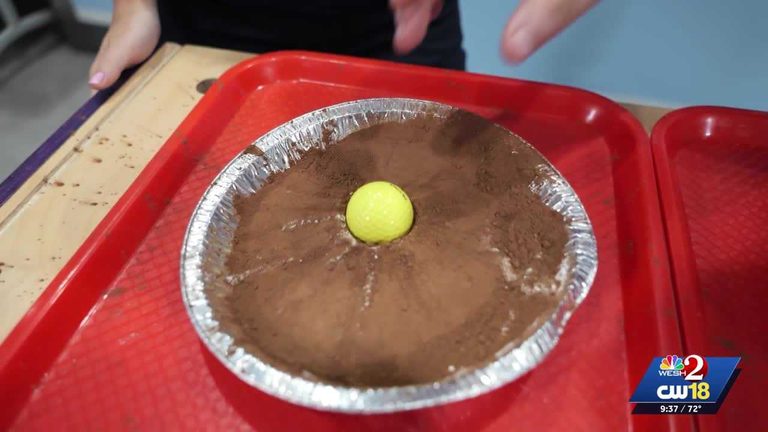
Gather a shallow container such as a pie tin, a layer of flour, a sprinkling of cocoa powder (or any dark, fine powder), a tray to keep the workspace tidy, and a small rock or rubber ball to serve as the impactor.
Step‑by‑step guide
1. Spread an even layer of flour in the bottom of the container. This light powder represents the moon’s regolith, the fine dust that covers its surface.
2. Sprinkle a thin layer of cocoa powder over the flour. The dark powder creates contrast, making the resulting crater easy to see.
3. Place the tray beside the container to catch any stray powder.
4. From a low height, drop the rock or ball onto the powder surface. Vary the height to demonstrate how impact speed influences crater size.
5. Observe the depression that forms. The shape, depth, and rim of the crater illustrate the physics of high‑velocity impacts that have shaped the moon for billions of years.
Why it works
The experiment mimics the way meteoroids strike the moon’s surface. Because the moon lacks an atmosphere, objects hit it at full speed, blasting out material and leaving a crater. By adjusting the drop height, children can see how faster impacts create larger craters, reinforcing concepts of kinetic energy and momentum.
Tips for families and teachers
Use objects with different textures—such as a spiked toy or a smooth marble—to show how shape affects the final crater. Encourage kids to record measurements of crater diameter and depth, then graph the results. This adds a math component and turns a simple demonstration into a full‑scale classroom lesson.
Because the materials are inexpensive and the mess is easy to contain with a tray, the activity works well in kitchens, classrooms, or church youth groups. It also provides a natural segue into discussions about space exploration, the Apollo missions, and the importance of scientific curiosity.
Connecting faith and science
Many families appreciate the chance to explore God‑given wonders like the moon while reinforcing stewardship of knowledge. The experiment highlights the order and design evident in creation, offering a tangible way to discuss the marvels of the heavens with children.
Whether you’re planning a weekend family night, a Sunday school lesson, or a school science fair, this moon‑crater experiment brings the cosmos a little closer to home.
Original reporting: WESH Orlando — read the source article.