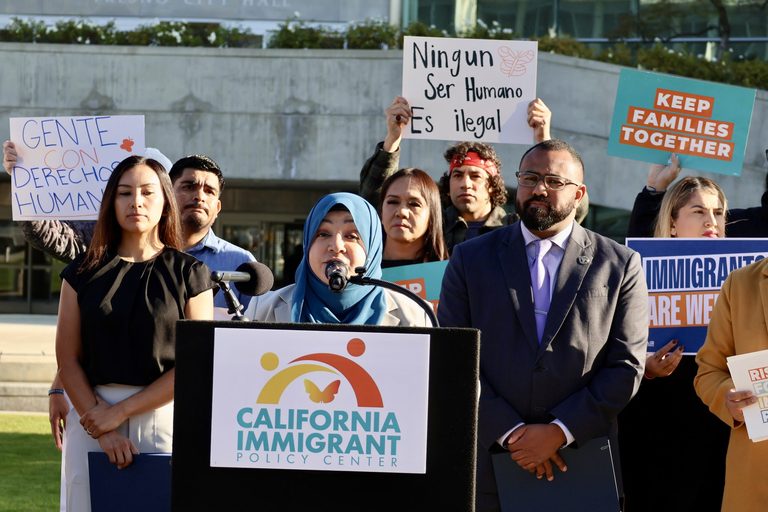
Fresno residents saw two major policy moves approved Thursday, actions the city says will protect community safety and preserve local jobs. In a 6‑1 vote, councilmembers adopted a resolution that bars Immigration and Customs Enforcement (ICE) from staging, processing, surveilling, or using any city‑owned property for federal immigration enforcement, a measure championed by Councilmembers Annalisa Perea and Nelson Esparza.
Mayor Jerry Dyer supported the resolution, stating that while the city will not host ICE operations, it will not impede legitimate criminal law enforcement. “There’s not an expectation that we’re going to have armed police officers going out and confronting armed ICE agents,” Dyer said, adding that the city’s public spaces are funded by taxpayers and should serve the community that funds them.
The policy applies to all city‑owned land, including parks, parking lots, recreation facilities and vacant parcels, and requires city employees and contracted security to document any attempts to use these sites for ICE activities. Deputy Executive Director Sukaina Hussain of the California Immigrant Policy Center noted that the ordinance mirrors AB 1807, a state law taking effect in January that bans ICE staging on state‑owned property. Similar measures have recently passed in Fremont, Santa Rosa and Alameda County.
At the same meeting, councilmembers voted 6‑1 to extend Fresno’s Community Workforce Agreement (CWA) through Dec. 31, 2031, while raising the minimum project cost subject to the agreement from $1 million to $2.5 million. The CWA, originally signed in September 2021 with the Fresno, Madera, Tulare and Kings Building Trades Council, sets wages, benefits and hiring goals for construction workers on city‑funded projects. City Manager Georgeanne White noted that of the 59 projects previously covered by the agreement, the average contract amount exceeded $4.7 million, prompting the council to adjust the threshold.
Union leaders expressed concern that the higher threshold could reduce union labor on smaller projects. Building Trades Council representative Chuck Riojas said the council and the union had previously agreed on a $3.5 million threshold and urged consideration of that figure. Councilmember Nick Richardson was the lone dissenting vote on both measures, citing concerns about potential impacts on public safety and labor costs.
What’s next: The city will begin implementing the ICE restriction policy, with officials tasked with reporting any unauthorized use of municipal property. The extended CWA will remain in effect until the end of 2031, guiding labor standards on future public works projects. Both measures are set to be monitored for compliance and impact on Fresno’s neighborhoods.
Sources: fresnoland.org