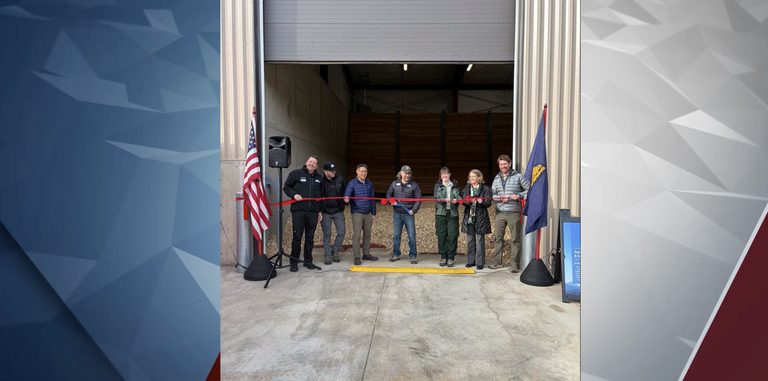
Mt. Bachelor ski resort in Bend has placed a new Wood Fuel Energy Facility into service, a biomass boiler that will replace a large share of the resort’s propane‑fired heating. The system is expected to reduce annual propane consumption by roughly 150,000 gallons and cut greenhouse‑gas emissions by more than 1,000 tons each year – a reduction of over 90%, according to KTVZ.
The 4,094‑MBH (1,200‑kW) high‑efficiency boiler sits at the West Village Base Area and distributes heat through insulated underground piping. The network supplies the Ski Patrol building, West Village Lodge, Mountain Gateway, Todd Lake, the Bachelor Butte Administration Building and the snow‑melt system that keeps sidewalks clear during winter.
John Merriman, president and general manager of Mt. Bachelor, said the project shows what is possible when public agencies and private partners collaborate toward a shared goal. “We’re grateful to the many organizations that helped make this investment a reality and hope that our facility will serve as an example for other businesses and mountain communities exploring renewable energy,” Merriman told KTVZ.
Wisewood Energy, the construction partner, highlighted the regional impact. Andrew Haden, founder and president of Wisewood Energy, said the facility demonstrates how a ski resort can help keep surrounding forests healthy while producing renewable heat for its own operations.
Deschutes County Commissioner Phil Chang noted that feasibility research began more than a decade ago. “Now, not only are we reducing overall greenhouse‑gas emissions and leaving fossil fuel deep in the ground, but we are also helping create new clean‑energy jobs,” Chang said.
The project was funded by a combination of public and private sources, including the U.S. Forest Service, Deschutes County, the Oregon Department of Energy, Mt. Bachelor, and POWDR. Janine Benner, director of the Oregon Department of Energy, said the state’s Community Renewable Energy Grant program was proud to support the effort, which turns an existing waste stream into usable renewable energy.
U.S. Sen. Jeff Merkley emphasized the broader forest‑management benefits, noting that the facility allows the Forest Service to remove more hazardous fuels, thereby reducing wildfire risk in Bend and the surrounding region.
For Bend residents, the new boiler means the resort’s heating will rely less on imported propane, potentially lowering energy costs and improving air quality. The use of local wood byproducts also supports forest restoration and wildfire mitigation projects in the Deschutes National Forest, contributing to long‑term community resilience.
What’s next: The biomass system is now fully operational, and resort officials will monitor performance throughout the winter season. Additional reporting on energy savings and emissions reductions is expected later this year, providing data that could guide similar projects in other mountain communities.