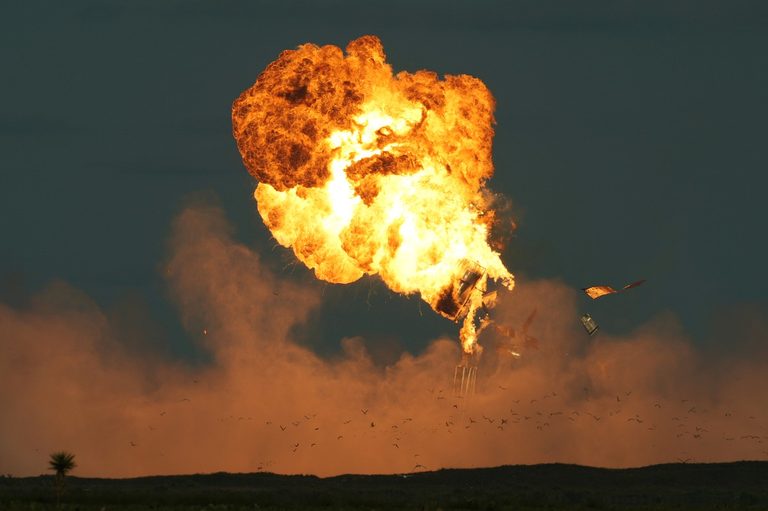
Texarkana – In a dramatic launch from SpaceX’s Starbase near the Texas‑Mexico border, the Starship vehicle achieved orbit even though its first‑stage booster failed to return to the launch pad and detonated in the Gulf of Mexico on Friday.
Booster loss and continued flight
After liftoff, the booster was diverted offshore as a safety precaution. The vehicle’s trajectory remained on course, and the spacecraft continued its ascent, heading toward a planned return to the pad on Saturday. The flight could last up to 22 hours, during which Starship will complete a series of orbital laps before attempting the historic “double catch” – the simultaneous recovery of both booster and spacecraft.
First attempt at a double catch
This launch marked the first time SpaceX tried to capture the upgraded 236‑foot (72‑meter) booster and the 171‑foot (52‑meter) Starship vehicle in mid‑air using mechanical arms on the launch tower. The booster’s loss meant the company missed the opportunity for a double catch, a milestone that would have demonstrated full‑scale reusability.
Mission objectives and satellite deployment
Shortly after reaching orbit, Starship released 26 of SpaceX’s newest Starlink satellites. The plan calls for the vehicle to circle the globe 15 times at roughly 170 miles (275 kilometers) altitude before returning for the scheduled Saturday recovery attempt.
Progress toward rapid launch cadence
SpaceX’s vice president of launch, Kiko Dontchev, told a NASA tech summit at Kennedy Space Center that full reusability is essential for scaling launch rates from a handful to tens of thousands per year. He emphasized that while Falcon rockets still discard their second stages, Starship aims to catch both stages, dramatically cutting costs and turnaround time.
Future launch sites and NASA partnership
The company intends to begin Starship launches from Florida within months and from Louisiana in the coming years. NASA continues to fund SpaceX billions of dollars for Artemis lunar missions, with Starship slated to carry astronauts to the Moon. The agency will decide later this year whether to use Musk’s Starship or Jeff Bezos’s Blue Moon for the Artemis IV landing, expected around 2028.
Community and industry impact
Local officials and businesses in the Starbase region watch the program closely, as successful reusability could bring new jobs and economic growth to the area. Despite the setback, the successful orbital insertion reinforces SpaceX’s commitment to advancing space exploration and commercial launch capabilities.
Original reporting: Texarkana Gazette — read the source article.