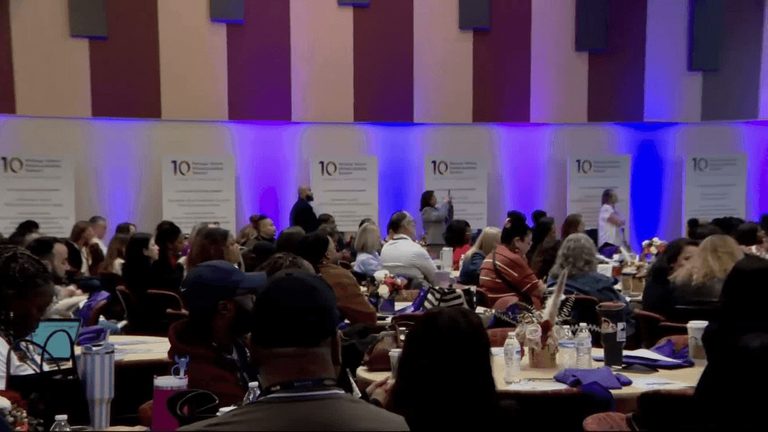
Las Vegas – Community leaders, service providers and young people gathered Friday at the Historic Fifth Street School for the 10th annual Nevada Youth Homelessness Summit. The event put a spotlight on the growing crisis of unaccompanied homelessness among Nevada’s youth and the urgent need for additional resources.
Young voices share personal experience
Joseph Baker, who found refuge through the Nevada Partnership for Homeless Youth, spoke about the daily struggle of trying to stay afloat while homeless. “You just trying to get by, you know, try not to let your circumstances just overwhelm your life,” he said. Baker’s story underscored the summit’s central message: help must go beyond basic shelter.
Scale of the problem
Arash Ghafoori, CEO of Nevada Partnership for Homeless Youth, cited a recent study indicating that more than 30,000 Nevada youths may be experiencing unaccompanied homelessness. He described these young people as lacking a parent, guardian, or another caring adult. Ghafoori called for a “bigger spotlight” on the issue and stressed the need for dedicated statewide funding streams, public‑sector investments, and private‑sector contributions.
Shelters at capacity
Kim Moore, youth services director at HELP of Southern Nevada, explained that many youths bounce between friends’ homes, never knowing where they will sleep each night. HELP’s Shannon West Homeless Youth Center, which serves roughly 400 young people annually, is currently at capacity. The center provides case management, meals, temporary housing and assistance with education and employment, ranging from work boots to mental‑health care.
High‑school students facing homelessness
Lily Noyes, executive assistant at Project 150, reported that more than 3,000 high‑school students in Southern Nevada are officially classified as homeless. Project 150 supports over 6,000 students facing housing instability or financial hardship, offering free food, clothing, hygiene products and school supplies through two local boutiques. The nonprofit also works discreetly, providing supplies in unbranded bags that fit inside backpacks so students are not singled out.
While Project 150 does not provide housing, it connects families with organizations that do. Noyes emphasized that many homeless students continue to attend school, often staying temporarily with friends, relatives, or even living in vehicles.
Calls for increased state attention
Summit participants highlighted progress in collaboration among providers and the growing involvement of youth with lived experience in shaping solutions. Nonetheless, Ghafoori urged additional state attention and resources to expand these efforts.
For families and young people seeking assistance, the Nevada Partnership for Homeless Youth and HELP’s Shannon West Center remain primary points of contact. When the center reaches capacity, staff work to connect youth with alternative providers.
How to help
Project 150 encourages community members to donate, volunteer, or simply spread the word about its discreet support services. Information about volunteering and donations is available on the organization’s website.
Original reporting: News 3 KSNV Las Vegas (local) — read the source article.