Two separate car bombings in Russia this week have left a former adviser to Ukraine’s former prime minister critically injured and a Russian military officer dead. The incidents underscore the heightened tension surrounding the conflict between Russia and Ukraine.
Bombing in Moscow Targets Former Ukrainian Adviser
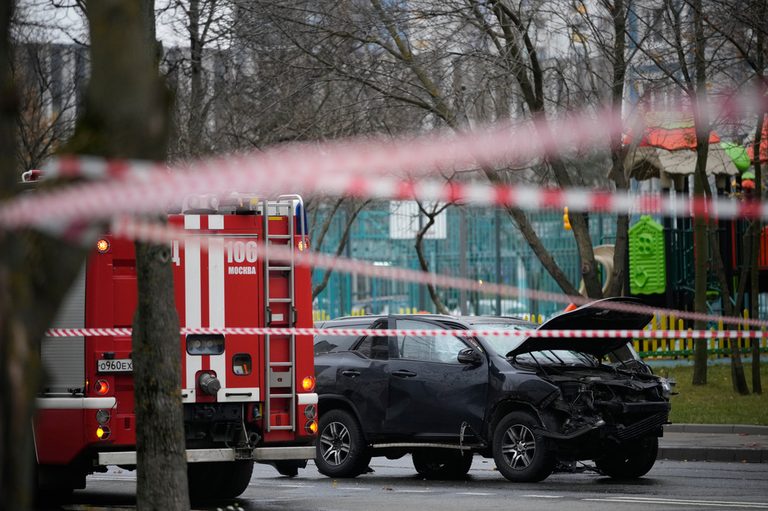
On Friday, a car driven by Sergei Zavorotnyi exploded in Moscow. Zavorotnyi, 72, previously served as an adviser to former Ukrainian Prime Minister Mykola Azarov. Russia’s Investigative Committee confirmed that he was hospitalized with serious injuries after the blast.
State television quoted Azarov, who now lives in Russia, saying he was “shocked” by the attack and believes Zavorotnyi was targeted because of his criticism of Ukrainian authorities. REN TV reported that Zavorotnyi lost his left arm, suffered multiple other injuries and was placed in a coma.
Zavorotnyi’s background includes work as a journalist for Komsomolskaya Pravda and authorship of a book on former President Viktor Yanukovych’s ouster. The U.S. Senate’s Select Committee on Intelligence previously identified him as an officer with Russia’s Foreign Intelligence Service.
St. Petersburg Bomb Claims Life of Military Serviceman
Earlier this week, a bomb detonated in the vehicle of a Russian military serviceman in St. Petersburg, killing the victim. The Investigative Committee did not release the victim’s name, but the local outlet Fontanka described him as a colonel. The outlet alleged that the explosive device was smuggled from Ukraine in a balloon and placed in the car by a man employed at a nearby grocery store, who fled Russia after the attack.
Other Russian media reported that the victim may have been a senior air‑force officer. Ukrainian authorities have not commented on either incident.
Broader Pattern of Violence
These attacks follow a series of bombings and shootings in Russia that have targeted individuals linked to the war in Ukraine. Moscow has repeatedly blamed Kyiv for the violence, while Ukrainian officials have occasionally claimed responsibility for specific operations.
In December 2024, Ukraine’s SBU security service announced it had organized the killing of Lt. Gen. Igor Kirillov, head of Russia’s nuclear, biological and chemical protection forces. Earlier this year, a bomb in a Moscow restaurant killed five people, including the bomber, and injured about 20 others. Russian media suggested the target was Colonel‑General Alexander Chaiko, who led the 2022 attempt to storm Kyiv and later became air‑force chief.
Other incidents this year have included a bomb that injured the director of a Russian drone factory near Yekaterinburg and a car bomb that killed a serviceman’s driver on the outskirts of St. Petersburg. In September, a serviceman was shot and injured in Engels, a city in Russia’s Saratov region that hosts a major long‑range bomber base.
International Context
The spate of attacks highlights the ongoing security challenges faced by both Russia and Ukraine. While Moscow continues to attribute the bombings to Ukrainian operatives, Kyiv has occasionally acknowledged responsibility for operations it deems legitimate retaliation against Russian targets.
U.S. intelligence agencies have monitored the situation closely, noting the potential for escalation and the impact on regional stability. The incidents also raise concerns about the safety of civilians and military personnel in both nations as the conflict persists.
Original reporting: KTSA News/Talk (San Antonio) — read the source article.