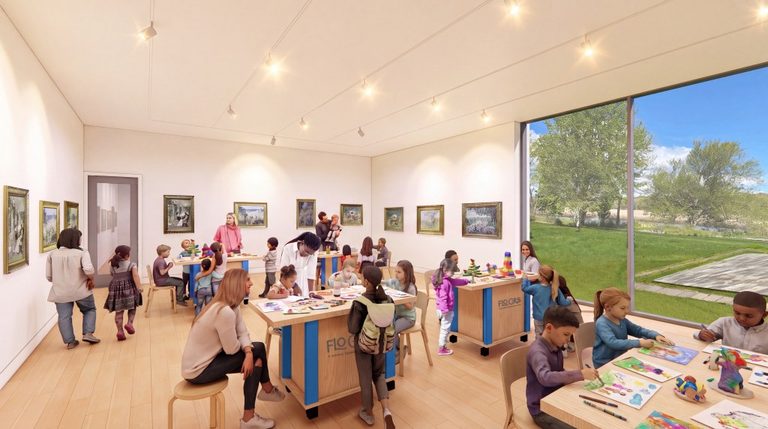
Old Lyme, Conn. – The Florence Griswold Museum, a cornerstone of Connecticut’s American Impressionist heritage, kicked off a $6.1 million renovation of the Robert and Nancy Krieble Gallery on Thursday. Executive Director Peter Steere said the project will create expanded galleries, a collections study and research center, and a 125‑person lecture space, all designed to draw new audiences and support scholars.
Project scope and partners
The renovation will add a 2,740‑square‑foot expansion to the existing 6,210‑square‑foot gallery, converting the current veranda into three midsize “pocket” galleries and a larger hall with etched‑glass windows by artist James Prosek that also serve as bird‑friendly design. Petra Construction Corporation and Oudens Ello Architecture (North Haven and Boston) will oversee the work through the fall of 2027.
In addition, the plan includes two accessible restrooms, upgraded lighting, and improved navigation to the museum’s Café Flo. Oudens Ello will also build a dedicated collections study and research center, providing space for archives dating back to the turn of the twentieth century.
Funding and timeline
The renovation is funded by the museum’s $24.2 million “Inspiration Lives Here” capital campaign, launched in spring 2022. To date, the campaign has raised close to $12 million. While the Krieble Gallery is temporarily closed, the rest of the campus – including the Florence Griswold House, the John and Dyanne Rafal Landscape Center, the Kelly Bill and John W. Hartman Education Center, and the William Chadwick Studio – remains open to visitors.
Old Lyme First Selectwoman Martha Shoemaker praised the project, noting that the expansion keeps the town’s cultural crown jewel “forward‑looking, open, and accessible to all.” Steere hopes a second phase can follow, contingent on additional fundraising.
Legacy and community impact
Since its founding in 1947, the museum has celebrated the legacy of the Old Lyme Art Colony, which helped launch American Impressionism. The new galleries and research facilities aim to continue that tradition, offering locals and tourists alike a deeper connection to the region’s artistic and natural heritage.
Original reporting: The Connecticut Mirror — read the source article.