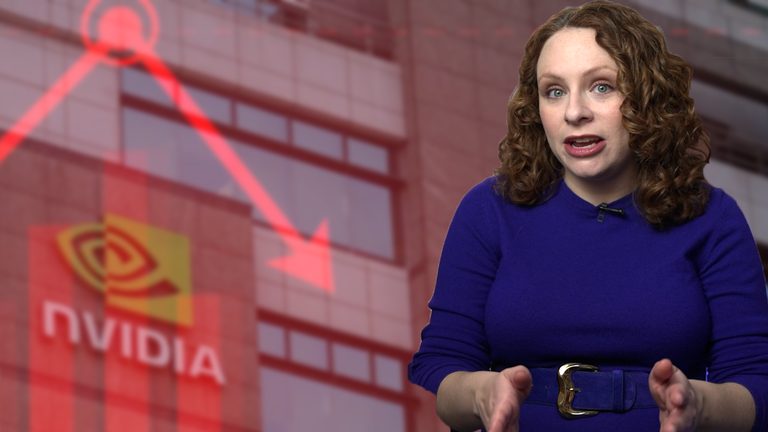
When Nvidia announced the resignation of its long‑time chief executive Jensen Huang, the company’s stock tumbled sharply on Thursday. Because Nvidia is a heavyweight in major market indexes, the dip reverberates beyond the trading floor and can reach ordinary Americans’ retirement accounts.
Why a single stock move matters to 401(k) investors
“One of the reasons a company like Nvidia can move the broader market is it’s a pretty large component of the market,” explained Ryan Sterling, chief executive of NerdWallet Wealth Partners and a chartered financial analyst. Nvidia’s weighting in indices such as the S&P 500 means that a sharp decline can pull down the overall index, affecting the net asset value of many mutual funds and exchange‑traded funds (ETFs) that track those benchmarks.
How the drop can appear in retirement plans
Most 401(k) participants do not own individual stocks directly. Instead, they invest in pooled vehicles such as target‑date funds, index funds, or balanced funds that hold a basket of equities, bonds and other assets. Many of these funds include Nvidia shares because the chipmaker is a leading technology player and a growth engine for the U.S. economy.
“For most 401(k) investors, the target‑date funds … are very well‑diversified,” Sterling said. “And this is why you diversify, is you want to minimize the chance that one story, one scandal is going to have an impact on your retirement.”
What should investors do?
Financial advisers recommend a calm, long‑term perspective. A decline in a single stock, even one as prominent as Nvidia, does not automatically warrant a change in a diversified retirement strategy. Investors can take three practical steps:
- Review fund holdings: Check the most recent fact sheet or the plan’s website to see whether your 401(k) funds hold Nvidia or other technology stocks.
- Consult a professional: A certified financial planner can help you assess whether your overall asset allocation aligns with your retirement timeline and risk tolerance.
- Consider rebalancing: If you discover an outsized concentration in a single company, you may choose to shift a portion of your savings into broader market funds or other asset classes.
Keep short‑term headlines in perspective
Sterling cautioned that market swings are often driven by headlines rather than fundamentals. “At the core of investing, the reason the U.S. market and markets around the world have gone up over time is because it’s really a function of progress and innovation. Betting against progress and innovation is a very dangerous thing to bet against,” he said.
In other words, while the immediate reaction to a CEO departure can be dramatic, the underlying drivers of economic growth—technological advancement, consumer demand, and entrepreneurial spirit—remain intact. Investors who stay focused on these long‑term trends are less likely to make knee‑jerk decisions that could jeopardize their retirement goals.
When heavy exposure warrants a closer look
If a participant’s retirement portfolio is heavily weighted toward Nvidia, either through a concentrated fund or a personal investment strategy, a more proactive approach may be warranted. Sterling suggested three options for those in this situation:
- Increase savings to offset potential losses.
- Trim discretionary spending to free up cash for additional contributions.
- Sell a portion of the Nvidia holdings and reinvest the proceeds into a broader mix of assets.
These steps help preserve capital while maintaining exposure to the broader market’s upside potential.
Bottom line
While Nvidia’s stock slide is a notable market event, most 401(k) investors are insulated by diversified fund structures. By reviewing holdings, consulting trusted advisors, and keeping a long‑term view, retirees and savers can navigate short‑term volatility without compromising their financial future.
Original reporting: KOAT Albuquerque — read the source article.