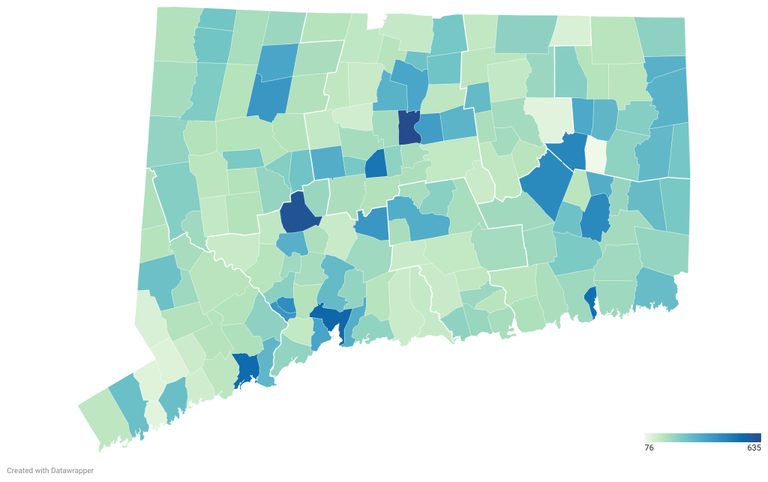
Connecticut’s most vulnerable communities are bracing for the impact of federal health‑policy changes enacted during President Trump’s administration. A report released this week by DataHaven and Health Equity Solutions shows that cities such as Hartford, Waterbury, New Haven and Bridgeport, as well as western towns like Cornwall and Bridgewater, are at greatest risk of losing Medicaid coverage or facing higher insurance premiums.
Medicaid work requirements raise the stakes for low‑income families
Beginning Jan. 1, the Medicaid work‑requirement provisions for the state’s HUSKY D program took effect. Adults without dependent children must now prove at least 80 hours of work, $580 of monthly earnings, or an equivalent amount of community service or training. While the rule includes several exemptions, the report estimates that more than 100,000 Connecticut residents could lose coverage if they cannot meet the new standards.
The administration’s goal was to encourage self‑sufficiency and reduce federal spending on programs that do not require work. State officials note that the policy targets those who are able to work but have not yet done so, aligning with the Trump administration’s broader effort to tighten eligibility and curb wasteful spending.
Immigrant coverage cuts add to the burden
One Medicaid change passed as part of H.R. 1 has already taken effect. As of Oct. 1, lawfully present immigrants—including refugees, asylees and victims of human trafficking—were removed from coverage. The report attributes roughly 3,200 lost HUSKY enrollments to this change, with the highest losses in Bridgeport, Waterbury, Hartford and Danbury.
Critics argue the cuts hurt vulnerable newcomers, but the administration maintains that the reform ensures federal resources are directed toward citizens and lawful permanent residents who meet work requirements.
Expiration of ACA subsidies threatens premium spikes for the self‑employed
At the end of 2025, the temporary COVID‑era subsidies for Affordable Care Act plans will expire. Residents who earn more than 400 % of the federal poverty level will no longer receive financial assistance, while those below that threshold will see reduced aid. Because western towns such as Cornwall, Bridgewater, Roxbury and Warren have higher concentrations of self‑employed workers—who typically purchase ACA plans—the report projects these areas will see the steepest premium increases.
Self‑employment rates are higher among older residents, another factor that could amplify cost pressures in these communities.
State response offers a modest safety net
Governor Ned Lamont’s office notes that Connecticut created a Temporary Premium Assistance fund in 2026 to help residents who lose subsidy support. Lamont recently extended this assistance for another year, providing a short‑term buffer while families adjust to the new federal landscape.
While the state’s stop‑gap helps, the report underscores that the underlying federal reforms—designed to promote personal responsibility and fiscal prudence—will continue to shape Connecticut’s health‑coverage picture for years to come.
What residents can do
Individuals affected by the work‑requirement rule should gather documentation of employment, earnings or qualifying community service and submit it promptly to the HUSKY D program. Those facing premium hikes are encouraged to explore alternative coverage options, such as employer‑sponsored plans or private market policies, before the subsidy expiration date.
Community groups and faith‑based organizations can play a vital role by assisting families with paperwork and offering guidance on navigating the new requirements, reinforcing the traditional family and faith values that strengthen our neighborhoods.
Original reporting: The Connecticut Mirror — read the source article.