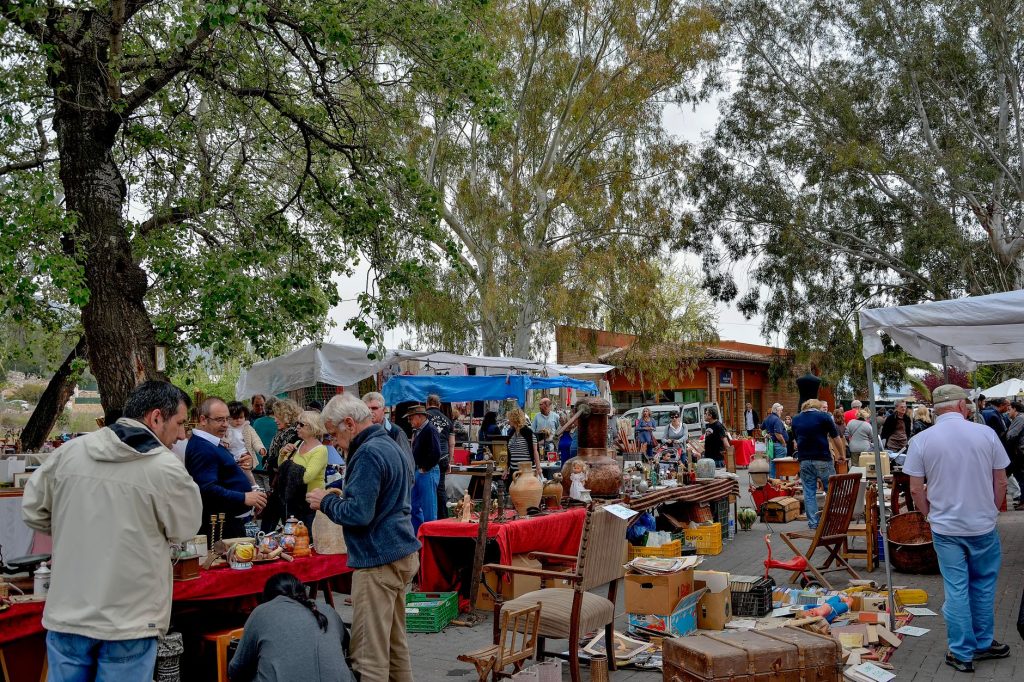
The Fresno Flea Market on Blackstone Avenue has been open every day of the week for decades, which is unusual for an outdoor market of its size and sets the tone for everything else about the place.
The market occupies a sprawling lot on the north end of Blackstone, just past Shaw, in a stretch of the avenue that tends to get overlooked in favor of the chain stores clustered further south. From the street, the layout is not immediately obvious — vendors are arranged in rows that extend deeper than the frontage suggests, and new arrivals sometimes spend the first ten minutes just getting their bearings.
On a weekday morning, the crowd is thin enough that sellers have time to talk. A man with two folding tables covered in socket sets and hand tools will explain the provenance of each one if asked. Next to him, a woman sells cellophane-wrapped bundles of dried chiles — anchos, guajillos, pasillas — alongside small tubs of homemade salsa that go faster than she can make them. Farther down, somebody has laid out a full run of vintage Fresno Bee newspapers from the 1970s, weighted down at the corners with coffee mugs.
Saturdays and Sundays bring the full version of the market, with easily twice the vendor count and a food section that expands to include elote carts, a woman frying churros to order, and at least one tamale cooler that tends to sell out before noon. The produce section — loose vegetables sold by the pile rather than the pound — is worth a separate pass. Nopales, chayote, tomatillos, and bunches of epazote show up regularly, sold by vendors who also speak to what each one is good for.
Pricing across the market operates on the assumption that negotiation is normal. Marked prices are starting points, and nobody seems offended by a counteroffer, particularly later in the day when sellers are thinking about packing up. Clothing, housewares, electronics, tools, religious items, toys, and furniture all coexist without much curatorial logic, which is either the appeal or the obstacle depending on what a visitor is after.
What the Fresno Flea Market does well — and what distinguishes it from more polished weekend markets elsewhere in the valley — is that it functions as an actual commercial ecosystem rather than a curated experience. The people selling here are not hobbyists moving surplus; they are running small businesses, and the market reflects the population of the surrounding neighborhoods honestly. Armenian vendors sell dried fruits and nuts. Hmong sellers bring herbs and seedlings in the spring. Used furniture arrives in pickups and gets sold before the tailgate is up.
Admission is free. Parking is free. Bring cash, because most sellers do not take cards, and the ATM near the entrance charges a fee that feels punitive. Early morning gives the best inventory; late afternoon gives the best prices. Either way, plan on staying longer than expected — the market tends to hold attention in ways that are difficult to explain until after the fact.