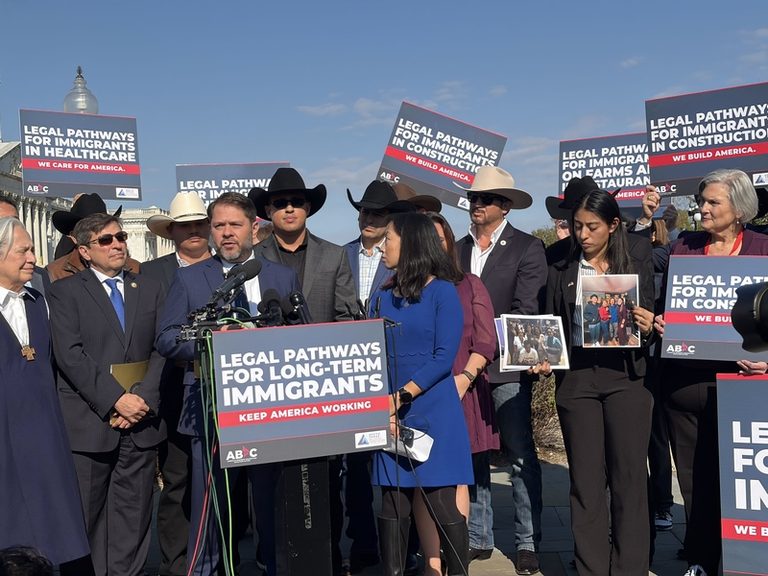
In Washington, a coalition of Democratic senators and industry leaders met on Wednesday to ask the Trump administration to prioritize work permits and other safeguards for long‑term illegal immigrants during the lame‑duck session and beyond. The push comes after the midterm elections, in which Democrats reclaimed both chambers of Congress.
Democratic proposals and local industry concerns
Arizona Democratic Sen. Ruben Gallego, joined by the American Business Immigration Coalition Action and the South Texas Builders Association, argued that families and construction firms need reliable immigration pathways. The builders group notes that roughly 30% of the construction workforce nationwide is made up of illegal immigrants.
“We owe it to these families to try anything, and I’m willing to try anything,” Gallego said, urging the White House to send a clear signal of seriousness beyond rhetoric.
Trump administration’s tentative openness
President Trump, acknowledging that his recent immigration enforcement stance may have cost Republicans votes, indicated a willingness to discuss limited work‑permit deals for certain sectors. While the administration has revoked millions of work permits over the past two years, the president’s comment suggests a potential shift toward targeted relief.
At the same time, President Trump appointed Stephen Miller—known for crafting the administration’s toughest immigration policies—to the role of White House chief of staff. Miller’s elevation has drawn sharp criticism from industry leaders who fear a continuation of harsh enforcement.
Industry backlash and political calculations
Benny Melendez, vice chair of the South Texas Builders Association, warned Miller that continued harassment of immigrant communities could jeopardize future elections, saying, “If you want to continue harassing our communities, prepare yourself not only to lose your job, but … these same communities you are now harassing will make sure you lose the White House in 2028.”
House Republicans, meanwhile, elected Ohio Rep. Jim Jordan—an outspoken Trump supporter who opposes immigration reform—to lead the minority caucus. Democrats, expecting a majority in the 120th Congress, remain confident they can muster the 60 votes needed for any immigration legislation.
Legislative outlook
Democratic Rep. Henry Cuellar, set to chair the subcommittee overseeing Department of Homeland Security funding, plans to use his position to add guardrails on ICE and clear the backlog at U.S. Citizenship and Immigration Services. He also intends to protect veterans and parents of U.S. students from deportation.
Gallego believes the Senate could achieve the necessary supermajority for a comprehensive immigration reform bill, or at least pass incremental measures that protect vulnerable communities. He emphasized that both a “big, beautiful conference immigration reform bill” and a series of targeted reforms are viable paths forward.
What’s next?
If the lame‑duck session does not produce major reforms, Democrats will look to the new Congress, where they anticipate a solid majority in both chambers. The administration’s response—highlighting openness to limited deals while retaining a firm stance on enforcement—will shape the next round of negotiations.
For now, the dialogue between lawmakers, industry groups, and the White House underscores the ongoing tension between the need for a stable labor force and the administration’s commitment to strong immigration enforcement.
Original reporting: The Connecticut Mirror — read the source article.