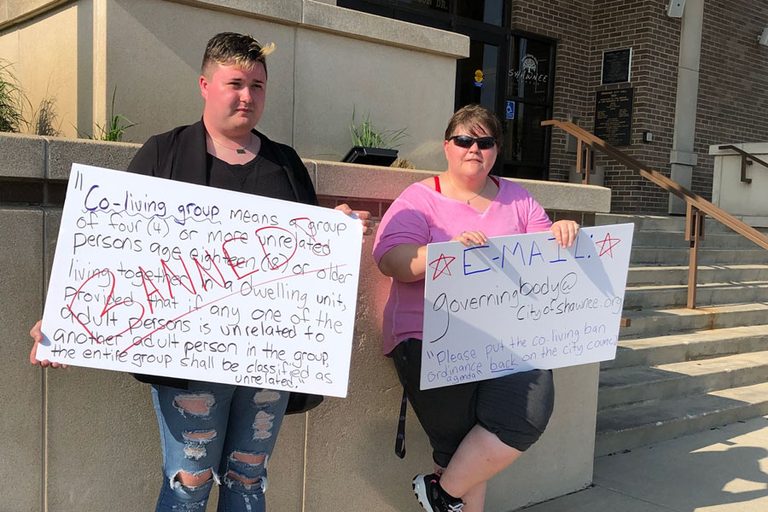
Shawnee City Council members are moving to soften the city’s controversial co‑living ban that was adopted in April 2022. The ordinance, originally designed to curb out‑of‑town investors turning single‑family homes into multi‑room rentals, limited unrelated occupants to three per dwelling. The council committee tasked with reviewing the rule on Monday recommended allowing up to four unrelated adults to share a home.
Proposed amendments
The draft changes would also delete a provision that automatically labeled an entire household as “unrelated” if any adult resident was not related to the others, even when some members of the household are family. City Attorney Jenny Smith said the amendments will be forwarded to the Shawnee Planning Commission for further review before the full council can vote.
Legal backdrop
The co‑living ban drew national attention and sparked a federal lawsuit in May 2023 filed by Shawnee resident Val French and Prairie Village‑based property‑management firm HomeRoom, Inc. A federal appeals court dismissed the case earlier this year, and the U.S. Supreme Court declined to hear an appeal, according to Smith.
Despite the legal battle and criticism from some community members, city spokesperson Doug Donahoo noted that there have been no documented violations of the ordinance in Shawnee.
Why the ban was enacted
When the ordinance was adopted, councilmembers cited concerns about capital‑venture groups purchasing homes, subdividing them into multiple rooms, and renting them out, which they said led to increased traffic and neighborhood complaints. Councilmember Kurt Knappen, the only remaining member from the 2022 vote, reiterated that purpose during the recent meeting.
“The point of why we did it is — everyone knows — is we had capital venture groups coming in and buying houses, and then making as many rooms (available) as they can, and renting them out to individuals. And as a result, you had a lot of traffic. You had a lot of complaints, traffic on the streets, other complaints,” Knappen said.
Cost of defending the ordinance
Smith disclosed that the city spent roughly $27,000 defending the ban in court.
Opposition and support
The nonprofit Pacific Legal Foundation, which represented the plaintiffs, argued that high housing costs force more people to share homes and that the ban restricts affordable housing options. Attorney David Deerson said the ordinance “intrudes into the private lives of people who should be allowed to structure their own homes in the way that they see fit.”
Councilmembers Steele Reynolds, Erin Aldridge, and Jeanie Murphy all expressed concerns that the ban may be unkind during a housing shortage. Murphy remarked, “While it’s legal, in this time of housing shortages and people not being able to afford housing, I don’t know if it’s the kindest way to deal with our residents.” Reynolds added, “I think the city doesn’t have any business determining who can live in someone’s home. So I think something like what is proposed here is a good start.”
Aldridge called the original restriction an overreach and supported returning to the pre‑2022 rules.
Next steps
The Shawnee Planning Commission is expected to consider the proposed amendments in December or early 2027. If approved, the council will vote on the changes later in the year.
Residents who wish to comment on the revisions are encouraged to attend the upcoming planning commission meeting or submit written feedback to the city attorney’s office.
Original reporting: Johnson County Post (Overland Park) — read the source article.