Police leaders across the Miami Valley are standing behind the deployment of Flock traffic cameras, saying the system provides a valuable tool for public safety while critics raise concerns about privacy and oversight.
Local officials highlight safety benefits
Miamisburg Police Chief Michael Brem told WHIO-TV that the cameras capture only a vehicle’s license plate and color, not facial images. “There’s a narrative that this technology is tracking people, and that’s simply not true,” Brem said. He added that the department’s new online portal, launched in early November, lets the public see where cameras are located and how many images have been linked to crimes, stolen vehicles or missing persons.
Harrison Township Trustee Georgeann Godsey, after researching the system, now supports its use. She recounted a personal experience in which a missing‑person alert helped locate her sister’s car within 15 minutes, underscoring the technology’s potential to aid families in distress.
Critics question civil‑liberty impacts
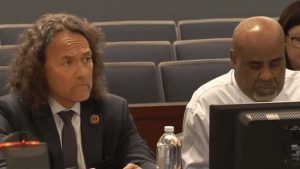
State Rep. Phil Plummer, a former Montgomery County sheriff, expressed unease about private companies collecting travel data. “I don’t think a private company should know I drive down this street 20 times a day,” Plummer said, adding that “innocent people are getting stopped because of bad technology, no oversight and no regulations.” He also warned that the cameras could be used for facial recognition, a claim the company’s spokesperson Jalen Johnson refuted, stating, “It is not recording people’s faces. It is not doing facial recognition.”
Viewers of WHIO‑TV echoed both sides. Laura Thomas called the system “an invasion of privacy,” while Michelle Stepp noted that “they can be very useful. Unfortunately, they have been used by some for the wrong reasons.” The Institute for Justice has documented more than 100 cases of law‑enforcement misuse of similar technology, reinforcing the call for stronger safeguards.
Calls for oversight and transparency
Plummer emphasized that he is not anti‑law‑enforcement or anti‑technology, but believes state and federal oversight are essential. “Our liberties continue to shrink with it, right? So, we need a third‑party vendor that can validate the systems as best it can be, and I can live with it,” he said.
Chief Brem responded that the department is committed to using the cameras responsibly. “We understand we’re using it in a way that keeps the community safe. No one wants to live in a place that isn’t safe,” he said.
What’s next for the program?
The debate is likely to continue as more municipalities consider adopting the technology. Both supporters and opponents agree that clear regulations and transparent oversight will be key to balancing safety benefits with the protection of civil liberties.
Original reporting: WHIO-TV Dayton (local) — read the source article.