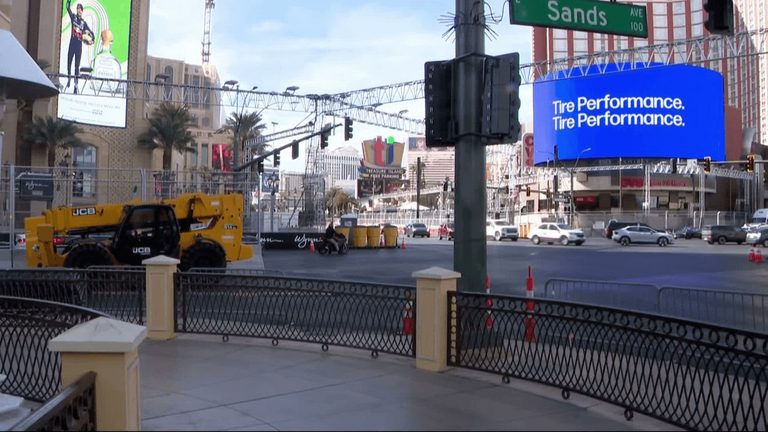
Las Vegas is gearing up for the 2026 Grand Prix, set for Thursday‑Saturday night next week, with race planners emphasizing smoother build‑out and teardown to lessen inconvenience for residents and merchants along the resort corridor.
Improved timelines for local businesses
Sameer Singh, co‑owner of Las Vegas Souvenirs and Gifts, a family‑run shop near the circuit, praised the event’s draw but noted lingering challenges. “I think F1 is great for Vegas,” Singh said, adding that the construction window has shrunk each year—from roughly seven to eight months in the inaugural race to about three months for the upcoming event.
Singh’s experience reflects a broader effort by organizers to address community concerns. Lori Nelson Kraft, the Grand Prix’s vice president of community affairs, said the team is applying lessons learned to speed up the erection and removal of grandstands and hospitality suites.
Community‑focused initiatives
Kraft highlighted several programs aimed at residents and the local workforce, including more affordable single‑night tickets, an employee‑mobility plan to help hospitality staff navigate the busy corridor, and outreach to schools and youth groups. The race has partnered with foster‑care programs, hosted 400 middle‑school students for behind‑the‑scenes tours, and involved Girl Scouts in cookie sales to racegoers.
Public‑safety coordination
Under‑Sheriff Andrew Walsh explained that while large events are familiar to Las Vegas, each requires extensive preparation. “There’s really nothing routine about the preparation,” Walsh said, noting that the Grand Prix receives the same special‑event assessment rating as New Year’s Eve.
County Commission Chair Michael Naft stressed that taxpayers will not shoulder the extra public‑safety costs. “Most of the burden—funding of public safety—falls on the event promoter,” Naft said, adding that the promoter is expected to cover the majority of those expenses.
Economic impact
Officials cited the race’s financial contribution: over the first three years, the Grand Prix has generated $3.2 billion in economic impact, created hundreds of jobs, and produced $43 million in tax revenue. Attendees spend an average of $2,400 each, roughly double the typical Las Vegas visitor, making the Grand Prix the city’s largest recurring event by financial impact.
With these improvements, organizers hope the 2026 Grand Prix will deliver a world‑class sporting spectacle while respecting the daily lives of Las Vegas families and businesses.
Original reporting: News 3 KSNV Las Vegas (local) — read the source article.