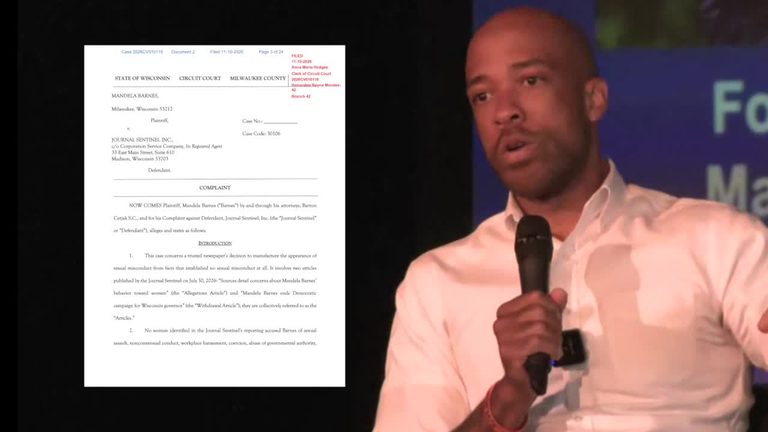
Milwaukee – Mandela Barnes, the former lieutenant governor and Democratic candidate for Wisconsin governor in 2026, has filed a defamation lawsuit against the state’s largest newspaper, the Milwaukee Journal Sentinel. Barnes contends that the paper published inaccurate claims about his personal conduct and failed to disclose a potential conflict of interest.
Background to the lawsuit
On July 30, just 12 days before the high‑stakes Democratic primary, the Journal Sentinel reported that Barnes was withdrawing from the race. The article linked his decision to allegations that he had used his party role to engage in sexual encounters with young adult women. It also noted that the Wisconsin Democratic Party had hired a law firm in 2025 to investigate similar claims.
Barnes’ legal filing rejects those allegations. He argues that no formal complaint was ever filed, no factual investigation was conducted, and no external probe took place. The lawsuit states, “No woman identified in the Journal Sentinel’s reporting accused Barnes of sexual assault, non‑consensual conduct, workplace harassment, coercion, abuse of governmental authority, or any sexual quid pro quo involving employment or political opportunity.”
Alleged conflict of interest
The suit further alleges that the newspaper relied on an unnamed source and that Barnes had a consensual relationship with a reporter who helped develop the story. According to the complaint, the relationship began around 2018 and continued intermittently for several years. Barnes claims the reporter’s name was omitted from the byline, creating a conflict of interest.
Executive Editor Greg Borowski responded on behalf of the Journal Sentinel, asserting that the story underwent standard editing and legal review and that Barnes was given an opportunity to respond before publication. Borowski also said the reporter in question was not involved in the reporting or writing of the published article.
Barnes’ reasons for exiting the race
In addition to the defamation claim, Barnes’ lawsuit provides his perspective on why he withdrew from the governor’s race. He says the decision was driven by internal polling data, campaign finances, the emergence of another candidate, and a lack of a viable political path—not by the newspaper’s reporting.
The lawsuit seeks monetary damages, though the exact amount will be determined at trial.
Legal and political implications
This case adds a new dimension to the already contentious Wisconsin gubernatorial primary. If Barnes prevails, it could set a precedent for how media outlets handle allegations involving public figures and the disclosure of potential conflicts of interest. The lawsuit also underscores the heightened scrutiny of personal conduct claims in modern political campaigns.
Both the Trump administration and Republican leaders have repeatedly emphasized the importance of protecting free speech while ensuring responsible journalism. While the case is a state matter, it reflects broader national conversations about media accountability and the rights of political candidates.
As the litigation proceeds, Wisconsin voters and political observers will be watching closely to see how the dispute influences the remaining primary candidates and the overall tone of the campaign.
Original reporting: FOX6 WITI – local news — read the source article.