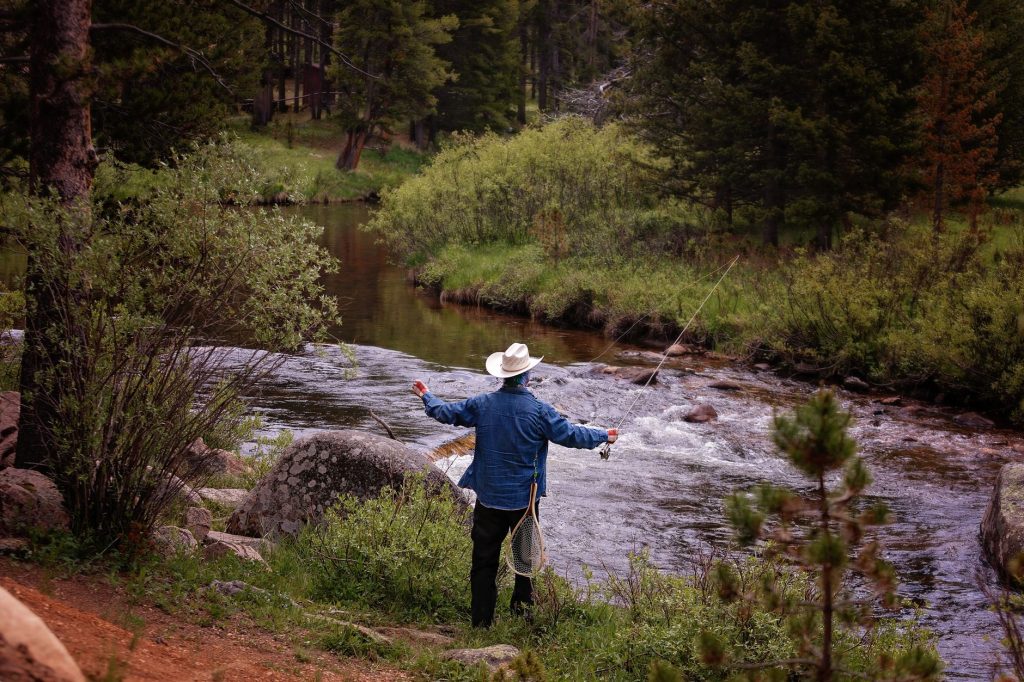
Sheridan’s most reliable fishing isn’t an hour’s drive into the mountains. It runs right through town, unhurried and cold, in a channel most people cross on their commute without a second look. The Tongue River cuts through the northern edge of Sheridan along Brundage Lane and the corridors near Soldiers and Sailors Park, and during the right season it holds brown trout the way a good diner holds regulars — consistently, without fanfare, year after year.
The appeal here isn’t scenery. There are more dramatic stretches upstream, toward the canyon, where the walls close in and the light bends theatrical. What the city stretch offers instead is access and honesty. No trail system required, no permit beyond a Wyoming fishing license, no shuttle to arrange. A wading angler can park near Soldier Creek Park or along Brundage Lane, pull on waders in a parking lot, and be in the water in under ten minutes. Locals who’ve fished it for decades tend to treat it like a stop they make on the way home from work — a quick hour with a 5-weight rod, home for dinner.
The Tongue runs cold enough to hold fish through the summer, fed by snowmelt and shaded in stretches by cottonwoods that make the city feel briefly far away. Brown trout in the 12-to-16-inch range are realistic expectations. Larger fish turn up after runoff settles in late June and again in September when the water drops and clears. Early mornings produce best; by midday in July the fish go lockjawed unless there’s cloud cover or a hatch moving through.
Dry fly fishing works surprisingly well on the city stretch. Elk hair caddis and parachute adams in sizes 14-16 cover most situations. When those go ignored, a small bead-head pheasant tail drifted along the bottom of a seam will usually find a taker. The substrate is cobbled and uneven, so careful wading matters more than gear. Felt-soled waders are preferred; the rocks can be slick after a rain.
Wyoming fishing licenses run about $14 per day for residents, $6 for youth, and around $14 for a day license for nonresidents — well below what a guided float on the North Platte or the Snake would cost before breakfast. The Tongue doesn’t need a guide. A stretch of publicly accessible water, a topo map of Sheridan, and an afternoon off work is a complete plan.
What keeps people coming back is probably something harder to quantify. There’s a low-stakes quality to urban fishing that big-destination rivers don’t quite replicate. Nobody is photographing the Tongue River city stretch for a magazine cover. The cottonwoods are dusty in August. There’s road noise. A dog walker passes on the bank trail and the fish spook for a few minutes. Then they settle back into position, the way fish do, and the whole rhythm starts again. For Sheridan anglers who don’t want to make an event out of it, that’s exactly the point.