Jack and Cathryn Gardner, a married pair of music teachers in Boise, have become the public face of Idaho’s emerging resistance to unchecked artificial intelligence. The Gardners organized the state’s first AI protest on Oct. 24 in front of the Idaho Statehouse and now co‑lead the Boise chapter of the national advocacy group PauseAI US.
Local activism meets state and federal lawmakers
Cathryn teaches elementary music in the Boise School District, while Jack, a former Nampa district teacher, gives private bass lessons to high‑school and college students. Both say they see AI eroding students’ critical‑thinking skills and creative independence. “I see it affecting how my students are thinking critically and cognitively,” Cathryn told Idaho Education News.
The couple has been meeting with Idaho officials, including U.S. Rep. Mike Simpson and Sen. Jim Risch, and they have even traveled to Washington, D.C., to discuss AI policy with federal legislators. Their efforts earned them a feature in The New York Times and praise from PauseAI US leaders, who call them the organization’s “best organizers.”
Policy goals and proposed safeguards
PauseAI US seeks stronger government regulation to prevent the development of “adversarial superintelligence,” or rogue AI systems that could act beyond human control. The Gardners argue that music education—one of the few remaining uniquely human activities—should remain centered on human interaction, delayed gratification, and creativity, qualities they say AI cannot replicate.
Idaho legislators are already taking steps. The Idaho Department of Education has been directed to develop guidance for K‑12 schools on AI implementation, and the state is beginning work on standards for an AI curriculum. Senate Democrat Janie Ward‑Engelking, a former teacher, said regulating AI will be a top priority in the upcoming session, citing personal concerns after an AI‑driven smartphone update removed her deceased mother’s contact.
Community outreach and future events
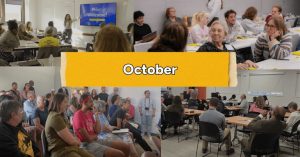
Beyond lobbying, the Gardners host monthly meetups and weekly tables at community events, gathering around a dozen volunteers and collecting hundreds of petition signatures calling for a pause on AI development. Their next public event, an “AI reality check,” is scheduled for Saturday at Our Lady of the Rosary Catholic Church in Boise.
By linking grassroots activism with legislative outreach, the Gardners hope to place human values at the center of technology policy, ensuring that future generations retain the uniquely human benefits of music, creativity, and critical thought.
Original reporting: Idaho Education News — read the source article.