In the November 2026 Indiana House elections, the debate over new data‑center developments emerged as a decisive issue for voters across the state. Democrat Tiffany Stoner defeated incumbent Rep. Becky Cash (R‑Zionsville) by emphasizing door‑to‑door outreach and a platform that called for greater local input, an end to tax breaks for data‑center projects, and a ban on non‑disclosure agreements.
Voter sentiment on data‑center projects
According to a Free Press Indiana poll cited by political scientist Laura Merrifield Wilson of the University of Indianapolis, nearly 70% of Hoosiers oppose the construction of new data‑center facilities. Wilson explained that the issue offered a clear litmus test for candidates, allowing voters to quickly judge who aligned with their concerns about transparency and community impact.
How the issue played out in key races
In northwest Indiana, where the concentration of data‑center sites is highest, political newcomer Ryan Kominakis (D) unseated Rep. Ed Soliday (R‑Valparaiso). Soliday, a 20‑year incumbent and chair of the House Utilities Committee, authored a 2019 bill that provided incentives for data‑center developers. Kominakis, a member of the Indiana Rural Summit, campaigned on stricter oversight and won by highlighting Soliday’s support for the incentives.
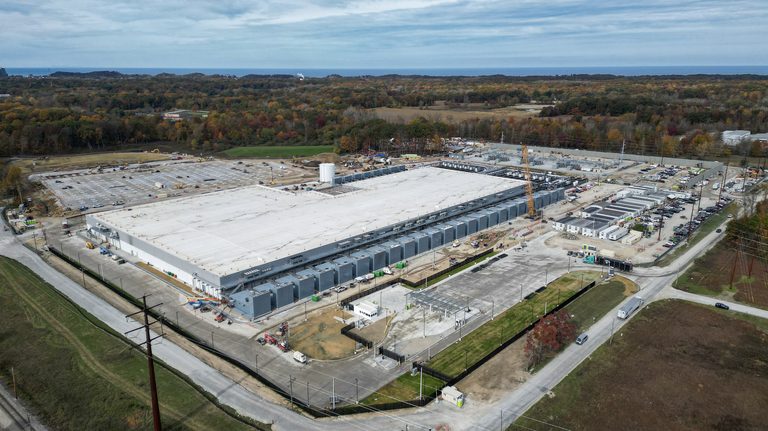
Stoner’s district borders the massive Lebanon LEAP campus, a 1,500‑acre Meta data‑center project. She told reporters that her message resonated because it addressed local concerns about tax breaks and secrecy agreements tied to the development.
Broader impact on the Statehouse
Kerwin Olson, executive director of the Citizens Action Coalition, credited the data‑center issue with helping Democrats flip 16 House seats and break the Republican supermajority. Olson noted that data‑center concerns were “top of mind for people going to the polls.”
Candidates who lost despite anti‑data‑center platforms
Not every anti‑data‑center campaign succeeded. Rep. Peggy Mayfield (R‑Martinsville) easily retained her seat against Democrat Carrie Syczylo, who opposed a 350‑acre Google data‑center in Monrovia. Similarly, Democrat Ryan Price, who called for tighter regulations on a Meta facility near Jeffersonville, was defeated by incumbent Rep. Zach Payne (R‑Charlestown). Michelle Higgs of the Indiana Rural Summit attributed these losses to straight‑ticket voting in heavily Republican districts, where voters may not have prioritized the data‑center issue.
Independent candidate Jason McClure, who ran against a data‑center ordinance in Miami County, received 36% of the vote. He interpreted the result as evidence of strong community opposition to data‑center projects, noting that even the 19% who voted for the Democratic opponent likely share that sentiment.
Local officials and future outlook
County commissioners, who hold final authority over data‑center approvals, are now facing heightened scrutiny from constituents demanding transparency and local control. The election outcomes suggest that future proposals will encounter more rigorous public review, especially in districts where opposition was a decisive factor.
FPI News, a nonprofit newsroom, funded by grants and donations, reported the story. Reporter Carson Gerber can be reached at 756‑204‑4250 or [email protected].
Original reporting: Mirror Indy — read the source article.