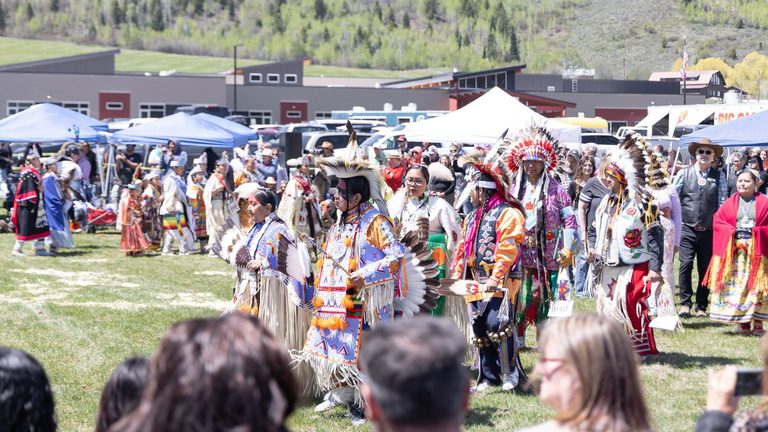
November marks National Native American Heritage Month, a federal observance that gives Indigenous peoples a platform to share their culture, traditions and crafts. This year’s theme, “250 Years and Beyond: Building a Culture of Service in Indian Country,” was announced by the U.S. Department of the Interior’s Office of Indian Affairs.
Service‑focused goals
The Office of Indian Affairs says the theme underscores “our shared work to recognize our past, celebrate the present, and deliver results for tribal communities.” Key priorities include securing justice for missing and murdered Indigenous people, opening new avenues for economic development, and dramatically improving the probate process for tribal members.
Monthly observances
Throughout the month, individual days honor various aspects of Native culture. Last Saturday was National Bison Day, recognizing the animal’s cultural, historical and economic importance to Tribal nations. On Sunday, Nov. 15, “Rock Your Mocs Day” will celebrate Tribal identities through traditional footwear.
Thursday, Nov. 19, will be Red Shawl Day, a day of remembrance for missing and murdered Indigenous people. The Office of Indian Affairs notes the day “supports their families and communities and reaffirms our shared responsibility to advance justice and public safety in Indian Country.” A 2016 National Institute of Justice study found that 84.3% of American Indian and Alaska Native women have experienced violence in their lifetime, and the National Indigenous Women’s Resource Center reports murder rates for Native women on some reservations exceed the national average by more than ten‑fold.
Historical context
Jackson, Wyoming’s Town Council voted unanimously in 2023 to incorporate a land acknowledgment into all town meetings, naming the Nimi’ (Bannock), Niitsitapi (Blackfeet), Apsáalooke (Crow), Newe (Eastern Shoshone), Aaniiih (Gros Ventre), Nimiipuu (Nez Perce) and Hinono’eino (Northern Arapaho) peoples as the earliest inhabitants of the area.
Historically, New York declared an “American Indian Day” as early as 1916. In 1976, President Gerald Ford proclaimed Oct. 10‑16 as “Native American Awareness Week” for the nation’s bicentennial. The week evolved into “American Indian Week” in 1986 and later “Native American Indian Heritage Week.” By 1990, November was officially designated National American Indian Heritage Month.
Native American Heritage Day will be observed on Friday, Nov. 27, concluding the month’s series of events.
Original reporting: Buckrail (Jackson WY) — read the source article.