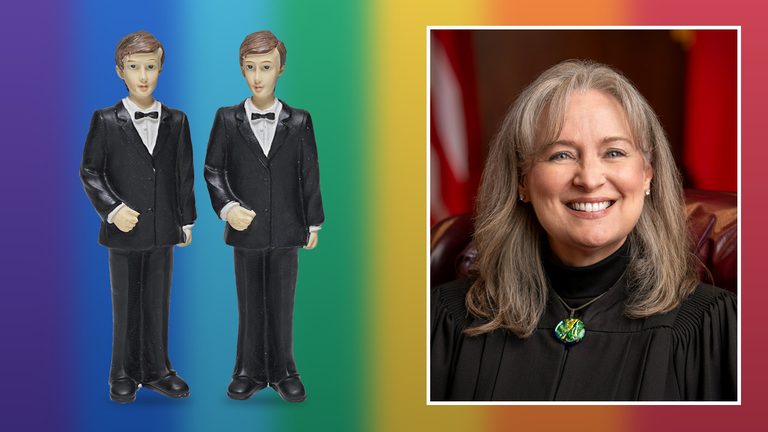
Dallas, Texas – In a move that has sparked sharp criticism from conservative legal groups, Texas Supreme Court Chief Justice‑elect Maggie Ellis (D‑TX) announced plans to eliminate the religious accommodation that allows judges to refuse to officiate same‑sex weddings. Ellis, who defeated incumbent Chief Justice Jimmy Blacklock (R‑TX) on Nov. 3, said the policy creates “back‑door discrimination” and should be replaced with a rule that judges either perform all marriages or none.
Current rule and its origins
The accommodation stems from an Oct. 24, 2025 order that permits judges to decline a ceremony on the basis of a “sincerely held religious belief” without violating judicial ethics. The Texas Supreme Court applied that language in Umphress v. Steel (Jan. 9, 2024), holding that Canon 4A(1) allows judges to refuse same‑sex weddings while still officiating opposite‑sex marriages.
Ellis’ proposal and political context
Ellis told The Dallas Morning News on Nov. 6 that the court should adopt a uniform standard: “Either you perform all marriages, or none.” She framed the existing exemption as an “attack on our community and our Constitution,” noting that she identified herself as a “queer candidate” in a Stonewall Democrats of Austin questionnaire.
Ellis’ bid to change the rule will require the support of the five returning Republican justices—Debra Lehrmann, John Devine, Jane Bland, Rebeca Huddle, and Evan Young—who all signed the original order establishing the protection.
Conservative legal response
The First Liberty Institute, a Plano‑based organization that represented Justice of the Peace Dianne Hensley in a related religious‑freedom case, opposed Ellis’ proposal. President Kelly Shackelford said, “First Liberty stands ready to defend any judge affected by this policy.” The institute argues that the exemption safeguards judges’ constitutional right to free exercise of religion.
Background on the Hensley case
In 2019, the State Commission on Judicial Conduct warned McLennan County Justice of the Peace Dianne Hensley (R) for referring same‑sex couples to other officiants based on her Christian faith. The warning was withdrawn in Sept. 2024 after a Travis County district court ordered the commission to pay $10,000 in damages and $630,000 in attorney fees under the Texas Religious Freedom Restoration Act. That judgment bars the commission from disciplining Hensley for declining same‑sex weddings, even if she continues to officiate opposite‑sex ceremonies.
Implications for Texas judges and families
If Ellis succeeds, judges who currently rely on the exemption would face a choice: perform all marriages, including those they consider contrary to their faith, or step down from the bench. Critics warn that forcing judges to act against sincerely held beliefs could erode confidence in the judiciary and infringe on constitutional religious‑freedom protections.
Supporters of the change argue that a uniform rule would eliminate discrimination against same‑sex couples and ensure equal access to the courtroom for all citizens, regardless of a judge’s personal convictions.
Next steps
The proposal will be debated at the Texas Supreme Court’s next session. With the court split between a newly elected Democratic chief justice‑elect and five Republican justices, the outcome remains uncertain. Conservative observers will be watching closely to see whether the court upholds the existing religious exemption or adopts Ellis’ uniform‑marriage rule.
Original reporting: WBAP News/Talk (Dallas-Fort Worth) — read the source article.