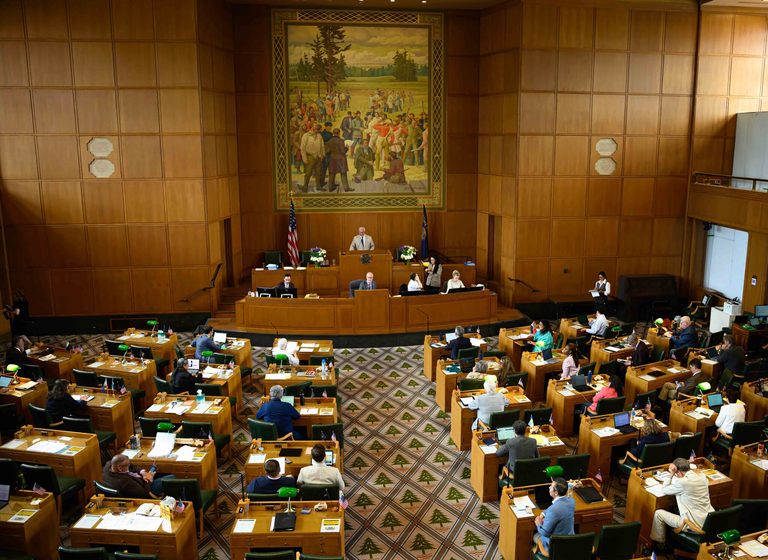
Oregon’s 2026 state election has produced a noticeable shift in the age profile of the House of Representatives. Two newly‑elected members—Democrat Hank Sanders of Hood River, who turned 26 just before the vote, and Republican Claire Lynn of Florence, age 27—will join a chamber where the average age hovers around 55.
Young leaders bring fresh perspectives
Sanders, a former journalist and former legislative aide to his mother, State Senator Lisa Reynolds, secured the 52nd District seat a week after his birthday. He says his lack of a mortgage and children allows him to live modestly on savings while serving the public. “It’s a lot of ramen and chicken thighs,” he joked, noting his frugal lifestyle as a journalist‑turned‑lawmaker.
Republican Claire Lynn, representing the 9th District from Coos Bay to western Lane County, attributes her ability to run for office to the support of her husband, who works in the electrical trade. “We’ve figured out how to make this work on one income,” she said, emphasizing responsible family budgeting.
Demographic breakdown of the new House
While the racial composition of the Legislature remains largely unchanged, the generational mix is evolving. Roughly one‑quarter of the 60 House members will be millennials or Gen Zers. Baby boomers will still account for about a quarter, and Generation X will fill the remaining half.
Gen Z, defined as those born between 1997 and 2012, now has a visible presence in the lower chamber, though none will sit in the Senate. Generation X continues to dominate the Senate, with a slight majority, while baby boomers make up more than a third of senators. Millennials represent about 10% of the Senate.
Historical context of youthful service
Sanders follows in the footsteps of notable young Oregon legislators. State Senator Wlnsvey Campos was elected to the House at 24 in 2020 and later to the Senate at 26. Former U.S. Congressman Earl Blumenauer also entered the House at 24. Sanders will be the youngest sitting member when sworn in January.
Lynn joins a small but growing group of young Republican women in the House, succeeding longtime Rep. Boomer Wright, who retired. Her platform stresses responsible forest management, strong law‑enforcement support, opposition to tax increases, and protection of women’s sports and spaces.
Implications for policy and representation
The infusion of younger voices may influence discussions on housing affordability, student debt, and workforce development—issues that directly affect their peers. Both Sanders and Lynn acknowledge the challenges of renting, saving for a home, and starting families, signaling a potential focus on policies that address these concerns.
While the overall partisan balance of the House remains unchanged, the generational shift could bring fresh energy to debates on education, economic opportunity, and community safety, aligning with the values of traditional families and individual liberty championed by many Oregon voters.
Looking ahead
The new legislative session begins in January, and these young lawmakers will take their oaths alongside seasoned colleagues. Their presence underscores a broader national trend of increasing youth participation in state government, reflecting a desire among younger Americans to shape the policies that affect their futures.
Original reporting: KTVZ (Central Oregon) — read the source article.