At a gathering in Boise last week, Idaho’s school trustees voted by more than 95% for three resolutions that call for a rewrite of the state’s 1994 K‑12 funding formula. The resolutions, backed by the Idaho School Boards Association (ISBA), seek a shift from the attendance‑based model to one that accounts for enrollment and the actual operational needs of districts, including full funding for special education.
Why trustees want change
Supporters of the current attendance‑based formula argue it incentivizes schools to keep students in seats. Critics, led by State Superintendent Debbie Critchfield, point out that today’s classrooms serve a far more diverse population. Teaching a special‑education student, an English‑language learner, or a gifted and talented pupil costs more than a typical student. Additionally, families now split schedules across multiple sites, making a pure attendance count less reflective of true needs.
What the resolutions propose
The first ISBA resolution calls for “predictable funding based on student enrollment and the actual operational needs of school districts,” with full funding for special‑education services. The second asserts that the existing formula fails to meet Idaho’s constitutional mandate for a “general, uniform and thorough” public school system. The third resolution would reward districts that achieve a 90% attendance rate with a bonus calculated on enrollment‑based metrics.
Governor Little’s position
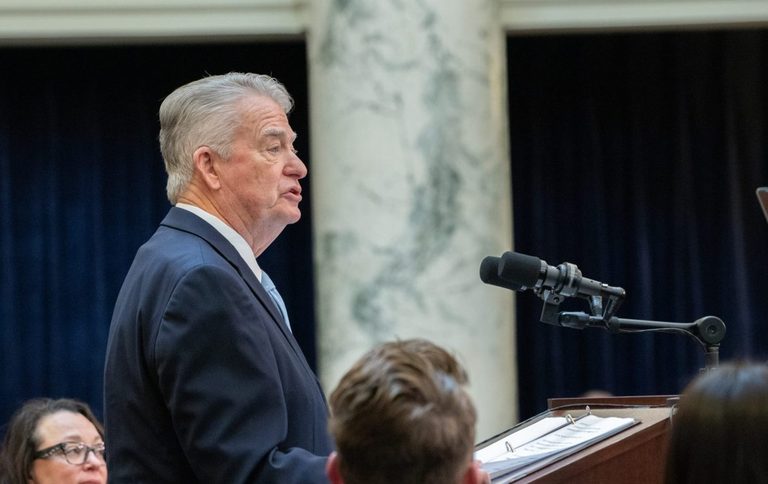
Governor Brad Little, who was easily re‑elected last week, has historically supported the attendance‑based approach. In 2022 he vetoed a bill that would have moved Idaho to an enrollment‑based model, citing concerns during the COVID‑19 pandemic when attendance fell sharply. Yet his veto letter also noted openness to future reform. This week, his office released a statement expressing gratitude for Superintendent Critchfield’s outreach but stopped short of committing to any specific direction.
Superintendent Critchfield’s plan
Critchfield, a former school trustee herself, has made funding reform her top priority. She proposes a modest $20 million increase to the 2027‑28 K‑12 budget to smooth the transition to a new formula. While the amount won’t fully cover the shift, she argues it will help keep schools operating smoothly as the state moves toward a more equitable system. “That’s a pretty good first step,” she said in a September interview.
What’s next?
The ISBA will lobby the legislature with the three resolutions and two additional proposals passed in 2025. Governor Little is expected to unveil his budget and deliver his State of the State address on Jan. 11, which will likely provide the first clear signal on whether the funding formula will be overhauled.
Implications for Idaho families
A modernized formula could mean more predictable resources for schools serving high‑needs students, potentially improving educational outcomes across the state. It also aligns with Idaho’s emphasis on school choice, ensuring that funds follow students wherever they learn, whether in traditional classrooms, online settings, or hybrid models.
For now, Idaho’s education leaders and families await Governor Little’s next move, hoping that the momentum generated by the trustees and the superintendent will translate into concrete legislative action.
Original reporting: Idaho Education News — read the source article.