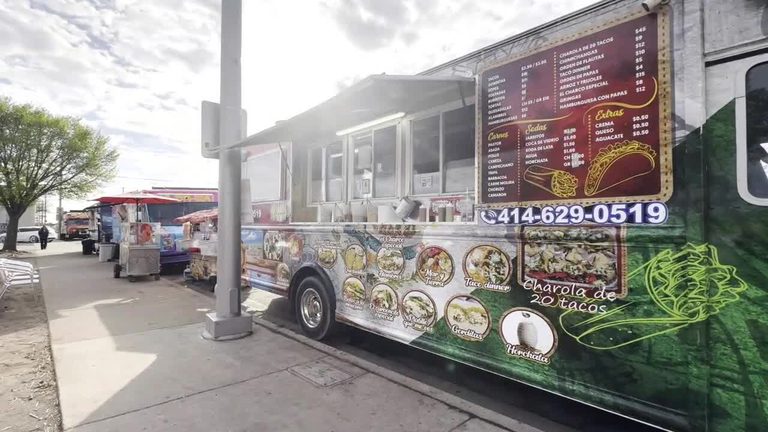
The Milwaukee Public Safety and Health Committee met on Saturday to discuss a new city proposal that would broaden the municipality’s authority over mobile food vendors. Under the draft ordinance, a food truck could lose its designated parking spot in a “Limited Operation Food Peddler Vehicle Zone” if the owner is found to have violated any city code, regardless of where the infraction occurred.
How the proposal would work
Currently, Milwaukee permits food trucks to operate in specific public parking areas that are licensed for mobile food service. Operators must follow a set of regulations covering food safety, sanitation, and general public‑safety standards while parked in those zones.
The new measure would add a mechanism for revoking that privilege based on violations that happen elsewhere – for example, a traffic citation or a health‑code breach at a different location. The process would begin with a written complaint submitted to the city clerk, accompanied by photographs or video evidence. The licensing committee would then review the materials in an open meeting and could recommend suspending the vendor’s access to its assigned space.
Due‑process safeguards
Committee members emphasized that the proposal does not create an automatic penalty. “A complaint alone will not strip a vendor of their parking rights,” said a committee spokesperson. “The licensing board will evaluate each case, give the operator an opportunity to respond, and only then decide whether suspension is warranted.”
These procedural protections are intended to balance the city’s interest in maintaining safe, orderly streets with the rights of small business owners who rely on the food‑truck model for income.
Background and recent legal challenges
The issue of food‑truck regulation has been contentious in Milwaukee for months. Earlier this year, the city attempted to impose a curfew on mobile vendors to address nighttime safety concerns. Food‑truck owners sued, and a judge issued an injunction that blocked the curfew before it could take effect. Council members did not appeal the ruling, leaving the curfew proposal in limbo.
That legal setback prompted officials to explore alternative tools, such as the current revocation proposal, which they argue targets specific misconduct without restricting operating hours.
Stakeholder reactions
Food‑truck operators expressed mixed feelings. Some welcomed the emphasis on due process, noting that a clear, transparent procedure could protect them from arbitrary penalties. Others warned that the expanded authority might be used to target vendors unfairly, especially if complaints are filed by competitors or disgruntled residents.
Local business groups, while not directly involved in the meeting, have historically supported measures that keep streets safe and orderly, arguing that predictable enforcement benefits both vendors and the broader community.
Next steps
The committee scheduled a follow‑up session for next week to hear additional public comments and to consider any amendments. If the proposal advances, it would require a vote by the full City Council before becoming law.
Milwaukee residents and vendors are encouraged to submit comments to the city clerk’s office ahead of the next meeting. The city’s website provides details on how to file a complaint, the evidence required, and the timeline for the licensing committee’s review.
Original reporting: FOX6 WITI – local news — read the source article.