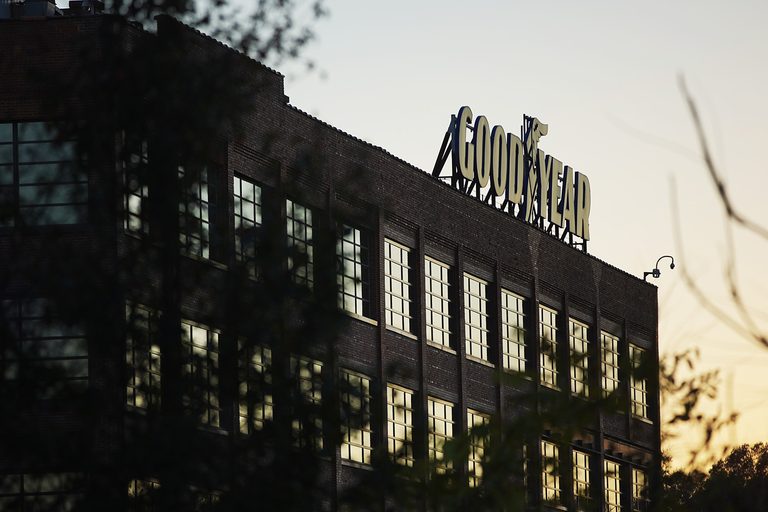
Goodyear Tire & Rubber Co., the last large rubber manufacturer headquartered in Akron and one of the city’s two Fortune 500 companies, announced on November 9 that chief executive Mark Stewart was removed and an interim chief executive will lead the firm. The leadership change follows a third‑quarter loss of $238 million and a share price that closed at just over $4 on November 10, a historic low for the company.
According to Signal Akron, Goodyear’s debt now stands at more than $7 billion, a figure that dwarfs its market value of roughly $1.2 billion. The debt burden, analysts say, has been building for decades. In 1986, a hostile takeover attempt by Sir James Goldsmith forced Goodyear to sell non‑tire divisions and incur $2.6 billion of debt to repurchase the company’s own shares.
University of Akron professor Anurag Gupta, a banking and finance specialist at Case Western Reserve University’s Weatherhead School of Management, described the debt as the company’s “single biggest issue,” likening it to a credit‑card holder struggling to make minimum payments. Gupta noted that Goodyear’s equity value is now less than half of what it was in 2010 and that a large portion of the debt is due within the next three years.
David Shaw, chief executive of London‑based Tire Industry Research, agreed that Goodyear has been “steadily going downhill for many years.” Shaw traced the decline to limited investment, short‑term planning, and a shift in industry power toward retail chains that can source tires from lower‑cost producers, including overseas manufacturers.
Both analysts highlighted external pressures such as higher fuel prices, rising raw‑material costs, and increased labor expenses at union‑ized U.S. plants. Shaw said competitors like Michelin and Pirelli are posting decent margins, while Goodyear’s cost structure remains a challenge.
Goodyear’s growth strategy over the past two decades has relied on acquisitions. The company bought Dunlop in 1999 under CEO Sam Gibara and acquired Cooper Tire in 2021 under former CEO Richard Kramer. While those deals added customers, they also added significant liabilities, limiting financial flexibility.
The company declined to comment on the leadership transition. The interim chief executive’s identity was not disclosed in the Signal Akron report, and Goodyear has not announced a timeline for appointing a permanent CEO. United Steelworkers Local 2L did not respond to requests for comment.
Analysts say the next earnings release and any potential debt‑restructuring plans will be closely watched by investors and Akron residents who depend on Goodyear for jobs and community support. The company’s future will hinge on whether it can reduce its debt load, improve margins, and invest in modernizing its factories.
Sources: signalakron.org, google.com