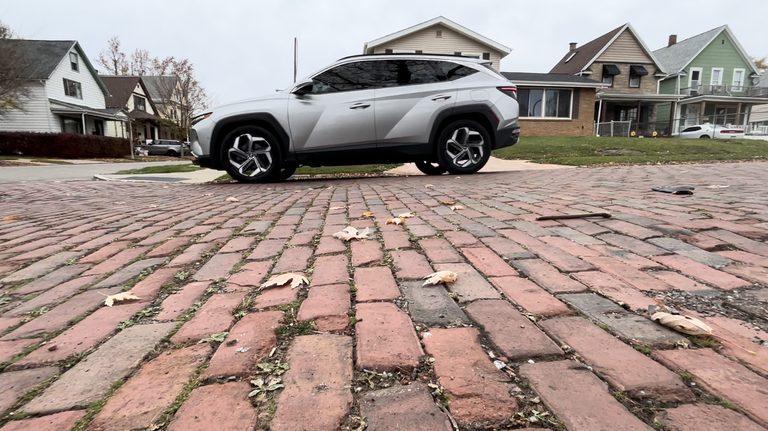
Buffalo’s Department of Public Works has begun paving over portions of the historic brick streets that have defined the city’s East Side for generations. The move follows a resident‑driven request and a city councilmember’s recommendation that the uneven surfaces posed a safety hazard for drivers, pedestrians and families.
Residents welcome smoother streets
On Daisy Place, longtime resident Ken Lee, who has lived there for about 25 years, described the previous condition as “terrible.” He said cars would bottom out on the deep divots, creating a de‑facto speed bump that made navigation difficult. “You would have to almost go on the sidewalk to escape the divots,” Lee explained.
Billy Banks, another long‑time neighbor, shared photos of the cracked bricks before paving began. She noted that the deteriorating surface made walking hazardous and risked vehicle damage. “Right now I feel better because I’m not going to damage my vehicle,” Banks said. “Pedestrians aren’t going to get hurt by stepping in a sinkhole, and aesthetically it looks great.”
Other blocks consider the same upgrade
Just a short walk away on Viola Park, the historic brick roadway remains untouched. Residents there, including Madino Osman, say the uneven surface makes it hard to walk with children or elderly family members. Osman added that paving would simplify school‑bus trips and protect family members from the bumps.
The city’s public‑works department mailed postcards to East Side homeowners asking for objections to paving. According to the department, no residents voted against the project. The councilmember who requested the work highlighted the road’s dangerous condition as the primary reason for the upgrade.
Preserving history beneath the pavement
While the bricks are no longer visible on Daisy Place, officials assure residents that the original brickwork remains intact beneath the new asphalt and could be restored in the future. However, the city estimates a full restoration would cost roughly $2 million, a figure that underscores the practical decision to pave now.
For some, the change touches more than just transportation. Nicolas Price recalled growing up in his grandmother’s neighborhood, where the brick streets were a daily backdrop. “I liked the bricks because growing up, this is my grandma’s neighborhood, so my whole life I knew the bricks,” he said, adding that he is not overly upset about the change.
Balancing heritage and safety
The East Side’s brick streets have long been a point of pride, symbolizing Buffalo’s historic character. Yet the city’s decision reflects a broader trend of prioritizing safe, reliable infrastructure for residents. By addressing the hazardous conditions, Buffalo aims to protect drivers, pedestrians and families while keeping the option to restore the historic bricks open for future generations.
As more of Buffalo’s historic brick streets face potential upgrades, the community continues to weigh the value of preserving a nostalgic streetscape against the practical need for smoother, safer travel.
Original reporting: WKBW 7 Buffalo (Buffalo section) — read the source article.