With holiday meals on the table, the San Antonio Water System (SAWS) is reminding the community to think twice before dumping cooking grease, oil or other fatty foods down the kitchen sink. Senior communications specialist Lilliana Gonzalez explained that once these substances enter the home’s plumbing, they solidify, cling to pipe walls and eventually create massive blockages in the city’s sewer system.
Why grease is a problem
“We tend to cook richer foods and maybe we do things like fry a turkey,” Gonzalez said. “Downstream, the grease will end up in the system and, quick reminder, the SAWS system is also your system.” When grease cools, it turns into a sticky, semi‑solid mass that can trap other debris – from wipes to food scraps – forming a clog that is difficult and expensive to clear.
Gonzalez noted that it isn’t just cooking oil that causes trouble. “Maybe ice cream or salad dressings or whole milk,” she added, pointing out that any fat‑containing product can solidify in the pipes.
Proper disposal methods
The solution is simple: place used grease, oil, butter, dairy or even wipes in a trash can, not the drain. The same rule applies to bathroom wipes, even those marketed as “flushable.” Disposing of these items in the trash prevents them from entering the sewer network and creating costly repairs.
SAWS shows the impact
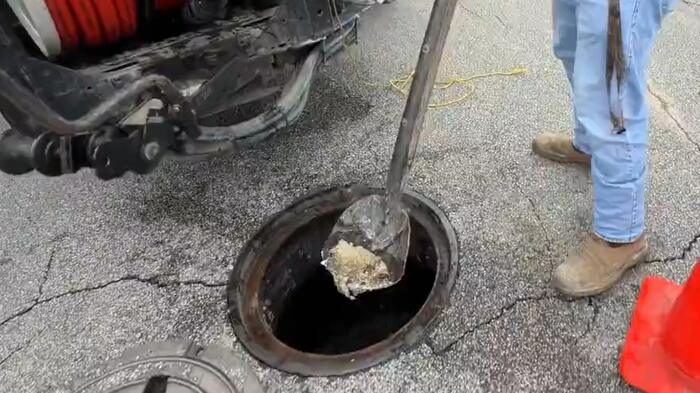
To illustrate the issue, a SAWS field crew conducted a live demonstration on a San Antonio street. Using a robotic camera, crew member Jonathan Butler inspected the sewer line while a second team operated a high‑pressure water hose and vacuum from a truck on the opposite side of the street. “This is all the grease buildup that they’re putting into the sewer main,” Butler said as he pointed out problem spots on a monitor.
The crew pulled out clumps of wipes and grease‑covered debris, which Gonzalez described as “gross” and “disgusting.” She warned that these blockages not only create unpleasant visuals but also drive up costs for ratepayers.
Cost to ratepayers
“If we make it somebody else’s problem by pushing it down the drain, it’s still your problem because it costs all of our ratepayers,” Gonzalez emphasized. SAWS maintains more than 6,600 miles of sewer lines throughout the city. Regular cleaning and maintenance prevent frequent sewer spills, but each emergency repair can add to the utility bill for every household.
What residents can do
SAWS encourages residents to:
- Collect used cooking grease in a container, let it solidify, then discard it in the trash.
- Avoid flushing any wipes, even those labeled “flushable.”
- Report persistent slow drains or foul odors to SAWS so crews can address issues before they become major clogs.
By taking these small steps, San Antonio families help protect the city’s infrastructure, keep water rates stable, and ensure that the holiday season remains a time of celebration, not sewer emergencies.
Original reporting: San Antonio, TX News (HLL/CB) — read the source article.