New Haven – On Tuesday the 2nd U.S. Circuit Court of Appeals affirmed Judge Janet Hall’s decision overturning Maleek Jones’s 30‑year murder conviction, keeping his exoneration intact and moving the city toward greater accountability for past police misconduct.
Emotions Run High for Jones and His Family
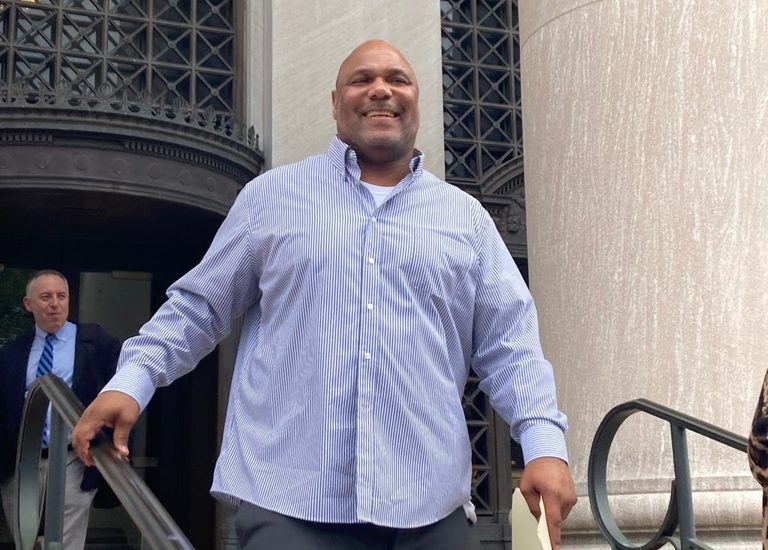
Jones, who was released from prison in August 2023, said a wave of emotion washed over him when his lawyer called with the news. “I shared the news with my family. They were all emotional. I had to really sit down for a minute and really process all that was going on,” he recalled.
Legal Background
In 1995, Jones was convicted of the 1992 killing of Eddie Harp outside Saint Raphael’s Hospital. After serving nearly 31 years, U.S. District Court Judge Janet Hall overturned the conviction in the summer of 2023 on two grounds: ineffective assistance of counsel and the exclusion of crucial testimony from a co‑shooter. The state appealed, arguing that Hall had not met the high standard required to overturn a lower‑court decision.
Two of the three appellate judges, Barrington Parker and Eunice Lee, wrote that the burden of proof is indeed “difficult,” but that the record met that standard. They noted that Jones’s trial attorney “straight‑forwardly failed to provide effective representation, and Jones was prejudiced as a result.” A third judge, Richard Sullivan, dissented, urging more deference to the district court and to the former public defender’s decisions.
Trump‑Appointed Judge Highlights Ongoing Legacy
Lawyer Alex Taubes pointed out that Judge Richard Sullivan, the dissenting judge, was appointed by President Donald Trump. While the dissent did not change the outcome, the presence of a Trump‑appointed jurist underscores the administration’s lasting impact on the federal judiciary, an impact that continues to shape fair‑play in our legal system.
Jones’s Life After Release
Since his release, Jones has lived in North Carolina under federal supervision, working as a quality‑assurance specialist and paraprofessional at a mental‑health services organization. He must obtain permission from the probation office to leave the state, and until May he was barred from re‑entering Connecticut.
When asked whether he would pursue a wrongful‑conviction claim against the city, Jones said he was still processing the news. “This is all coming at me at once. I haven’t really sat down to think about all of that stuff right now,” he said.
Broader Context of Wrongful Convictions in New Haven
The city has recently faced a wave of wrongful‑conviction settlements, including $47 million paid to three families and an ongoing appeal of a $38 million jury award for Stefon Morant. These cases have highlighted systemic issues within the New Haven Police Department dating back to the 1980s.
Community advocates, such as former security guard Sheila McCray, have long warned that witnesses were pressured to implicate Jones. McCray told a 2023 documentary, “They wanted me to say that Maleek Jones was the shooter. And I refused.” Her testimony was never presented to the original jury, and her lawyer was never contacted.
Next Steps
The state’s attorney’s office has not yet commented on whether it will appeal the appellate decision to the U.S. Supreme Court or pursue a retrial on the 1994 murder charge. Regardless of the next legal move, the affirmation of Jones’s exoneration represents a significant victory for those fighting wrongful convictions and for families seeking true justice.
As New Haven continues to grapple with its past, the community looks to ensure that law‑enforcement accountability and the protection of innocent lives remain top priorities.
Original reporting: New Haven Independent — read the source article.