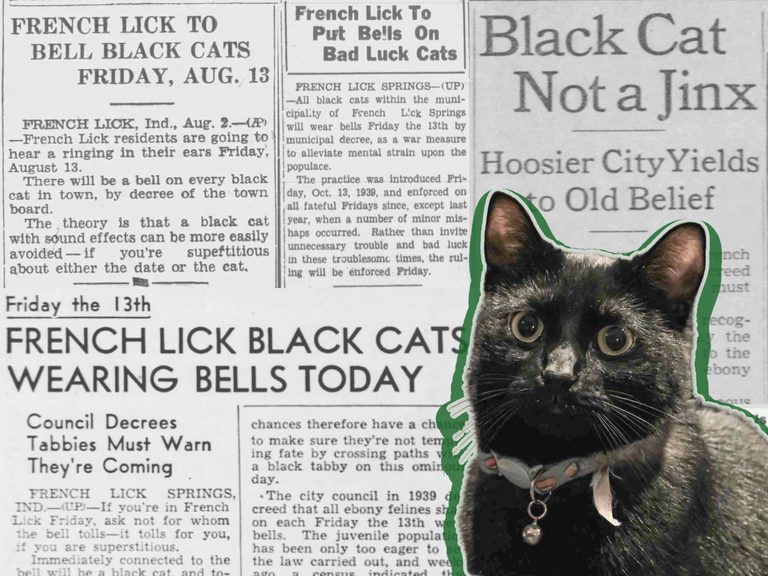
When French Lick’s town board met on Friday, Oct. 13, 1939, officials approved an unusual ordinance aimed at curbing the age‑old superstition surrounding Friday the 13th. The measure directed the town marshal to attach silver bells to every black cat in the community on that specific day, giving residents an audible cue if an “agent of misfortune” crossed their path.
Local humor meets folklore
Director of the French Lick West Baden Museum, Kenton Allbright, describes the law as “a little bit of superstition, a little bit of jest.” The ordinance quickly attracted national media attention and remained a headline curiosity for the next decade or two. While there is no record of the rule in the town’s current online ordinance database, newspaper accounts from the era suggest it was taken more as a playful community stunt than a serious regulatory effort.
Enforcement hiccups and local hijinks
A 1942 New York Times article noted that when the town failed to enforce the bell requirement in 1941, a “number of minor mishaps occurred,” though it did not specify what those mishaps were or whether any black cats were to blame. Allbright says the historical record is unclear about how rigorously the ordinance was applied.
The late‑1930s were a lively time in French Lick. Pranksters stole the downtown fire bell around Halloween, only to return it under cover of darkness, and some mischievous residents dyed the town’s famous Pluto mineral water green. Allbright says these antics reflect the town’s character, where religious traditions, folklore, and practical jokes coexisted.
Roots of the superstition
Folklore librarian Moira Marsh, retired from Indiana University, explains that the fear of the number 13 and the dread of Friday both have deep Christian roots. The Last Supper gathered Jesus and his twelve apostles—13 in total—while Friday marks the day of Christ’s crucifixion. The combination of the two dates, however, is a relatively modern superstition that gained popularity in 19th‑century French literature and spread to the United States in the early 20th century.
Black cats earned their unlucky reputation in medieval Europe, where they were linked to witches, evil spirits, and the devil. Some believed witches could transform into black cats, and others feared that a black cat crossing one’s path foretold misfortune. Yet Marsh points out that not all cultures share this view; in parts of Britain and elsewhere, black cats are considered symbols of good luck.
Legacy of a quirky ordinance
Although the bell‑on‑black‑cat rule eventually faded from public memory, it remains a favorite anecdote for local historians. Allbright says the story illustrates French Lick’s colorful past, a resort town once famed for its mineral‑water spas and gambling halls, where a blend of faith, superstition, and good‑natured mischief shaped daily life.
Today, the ordinance serves as a reminder that even small‑town governments can inject humor into governance, preserving a sense of community identity while acknowledging the nation’s broader cultural traditions.
Original reporting: Mirror Indy — read the source article.