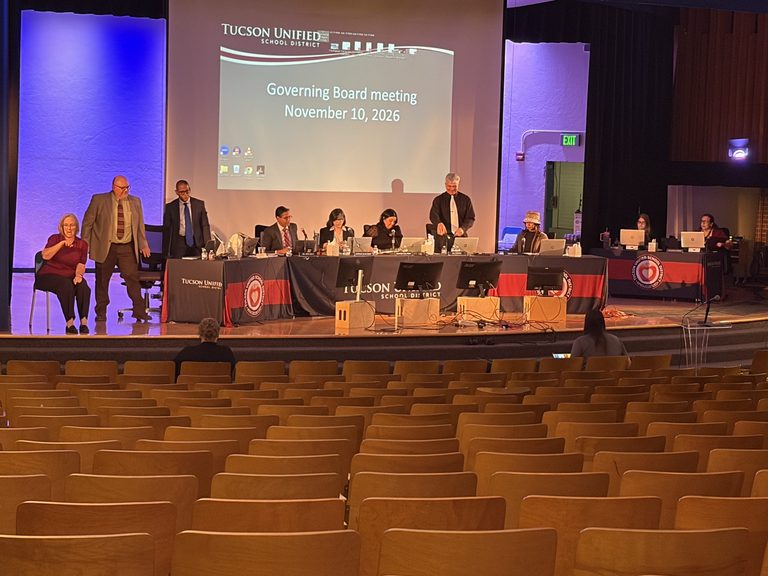
At Tuesday’s Tucson Unified School District (TUSD) Governing Board meeting, Superintendent Gabriel Trujillo outlined a two‑phase realignment package designed to bring the district’s finances back into the black and broaden educational choices for families. The proposal would close or merge 14 schools, cut the current $20 million deficit to about $14 million, and create new alternative‑education centers and “secondary academies” for grades 6‑12.
Financial rationale
Trujillo told the board that the plan is a “great pathway to get back in the black,” noting that TUSD lost nearly $8 million in state funding last year due to declining enrollment. He attributed the drop to lower birth rates in Pima County and the growing use of Empowerment Scholarship Accounts, which allow families to direct public funds to private‑school options.
By consolidating under‑utilized facilities, the district expects to save an additional $8‑$10 million beyond the $6 million already projected from the closures. The savings would help preserve core programs and fund the new alternative‑education initiatives.
Proposed school changes
Phase I (2027‑28 school year) would see three elementary schools merged:
- Hudlow Elementary into Sewell Elementary
- Cragin Elementary into Blenman Elementary
- Collier Elementary into Bloom Elementary
Phase II includes four larger restructurings:
- Magee Middle School merging with Sabino High School to form a “secondary academy” that keeps middle‑school students separate from high‑schoolers.
- Steele Elementary merging into Booth‑Fickett K‑8.
- Secrist Middle School merging with Santa Rita High School, creating another secondary academy.
- Cavett Elementary merging with Utterback Middle School, allowing Cavett to become an alternative‑education center focused on students with special needs.
All mergers would retain distinct buildings, schedules, and lunch periods for middle‑school students, addressing parental concerns about mixing age groups.
Community response
About 100 community members attended the meeting, with 18 speakers and six letter writers voicing opinions. Most comments focused on preserving neighborhood schools, while a few parents expressed worry about longer bus rides and the impact on local traditions.
Critics, including members of the local teachers’ union, argued that school closures could disrupt student learning and community cohesion. The union’s spokesperson, identified as a representative of the Arizona Education Association, warned that “closing schools in already‑stressed neighborhoods risks further alienating families.”
Trujillo responded directly, emphasizing that the plan is intended to “grow our district, especially in areas where we know that we’re struggling, like in middle school,” and that the new secondary academies would provide focused curricula without mixing age groups.
Potential benefits
District data show that Sabino High School currently serves the largest number of students affected by the realignment. After merging with Magee Middle School, the combined enrollment would reach 900‑1,000 students, a size Trujillo said would “easily cover your costs” while offering a broader range of courses.
Additionally, the proposal includes an alternative‑education center at Cavett Elementary, which would serve students with autism and other special‑needs, addressing a long‑standing gap in services for those families.
Next steps
The board will vote on the realignment package on Dec. 8. If approved, the district will move forward with the Phase I closures this fall and begin Phase II planning for the 2027‑28 school year.
Trujillo also highlighted the potential return of Prop. 123 funding—an education trust derived from Arizona’s public‑land sales—should the Republican‑led Legislature renew it. That infusion could further stabilize TUSD’s finances.
Parents and community members are encouraged to submit written comments before the Dec. 8 vote, ensuring their voices are heard as the district seeks to balance fiscal responsibility with quality education.
Original reporting: Arizona Luminaria — read the source article.