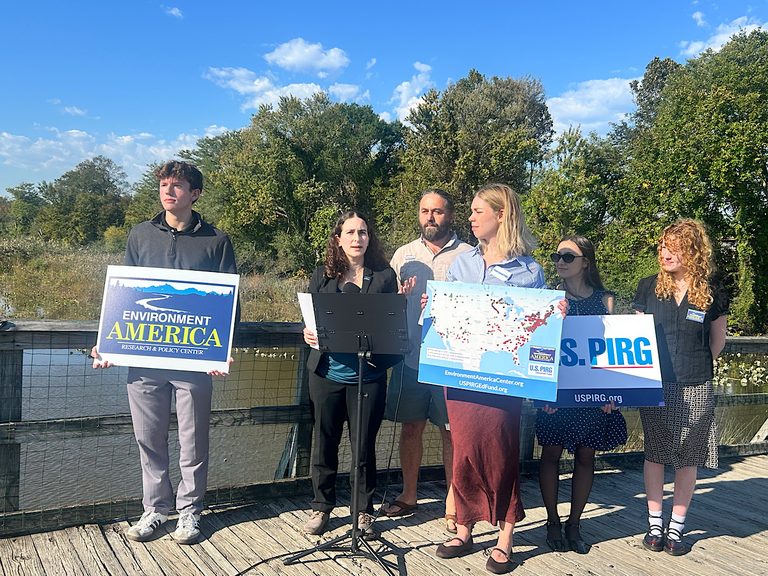
Washington, D.C. – Recent testing by the nonprofit Environment America Research and Policy Center revealed that per‑ and polyfluoroalkyl substances (PFAS), often called “forever chemicals,” were present in every water sample taken from the Anacostia River and Kingman Lake. The same study also found microplastics in all samples from the Chesapeake Bay watershed, underscoring a pressing need for expanded monitoring and remediation.
PFAS contamination is widespread
PFAS are synthetic chemicals that break down very slowly, allowing them to accumulate in water, wildlife and the human body over time. Long‑term exposure is linked to immune system suppression, reproductive and developmental issues, and an elevated risk of several cancers, including breast, kidney, testicular and respiratory cancers.
Lisa Frank, executive director of Environment America, told The Informer, “The more testing we do, the more PFAS we find… the most important thing is we already know that we should be stopping the use of these chemicals.” The Anacostia River tested positive for seven PFAS compounds, while Kingman Lake showed nine. Yet the EPA monitors only about 114 of the roughly 14,735 known PFAS compounds in routine water testing.
Microplastics add to the threat
Microplastics—plastic fragments smaller than five millimeters—were also detected in every sample from the Chesapeake Bay watershed. Brian Brooks, vice president of advocacy for the American Bird Conservancy, warned, “We can no longer treat plastic pollution as an isolated problem if every water sample contains microplastics.” These tiny particles can enter the food chain, harming fish, wildlife and ultimately human health.
Local leaders call for action
Riverkeeper Trey Sherard urged a ban on PFAS and related plastics, stating, “They’re all synthetic, carcinogenic, and causing reproductive harm. It’s time to stop their use and production.” He also advocated for a second‑generation sediment cleanup project that would screen for PFAS hotspots alongside the existing focus on polychlorinated biphenyls (PCBs).
Groundwork Anacostia River D.C. (GWARD) executive director Dr. Dennis Chestnut emphasized the river’s importance to the community, noting, “The health of the Anacostia is directly tied to the health of the Potomac River, which is the source of our drinking water.” He called on city leaders to prioritize the river across all agencies, especially since the waterway runs through neighborhoods of color and lower‑income residents.
Ongoing cleanup efforts
The District’s Department of Energy and Environment launched the Anacostia River Sediment Project (ARSP) in 2013. After 13 years of research and fundraising, the project will begin cleanup of the Washington Channel in 2027, with Kingman Lake and the most contaminated sections of the Anacostia River slated for remediation by 2028. While the project targets PCB hotspots, Sherard argues that PFAS should be included in the next phase.
What residents can do
Community groups such as GWARD are engaging local youth in river clean‑ups, floating litter traps and tree‑planting sessions. Residents are encouraged to support these efforts, reduce use of non‑stick cookware, grease‑resistant packaging and stain‑resistant fabrics, and advocate for stricter chemical‑use regulations.
With the Anacostia River recently earning a C‑ grade and a 71% score on the 2026 State of the River Report Card—the best rating in three decades—there is momentum to protect this vital resource. Continued testing, expanded monitoring and decisive action on PFAS and microplastics will be essential to keep the river healthy for future generations.
Original reporting: The Washington Informer — read the source article.