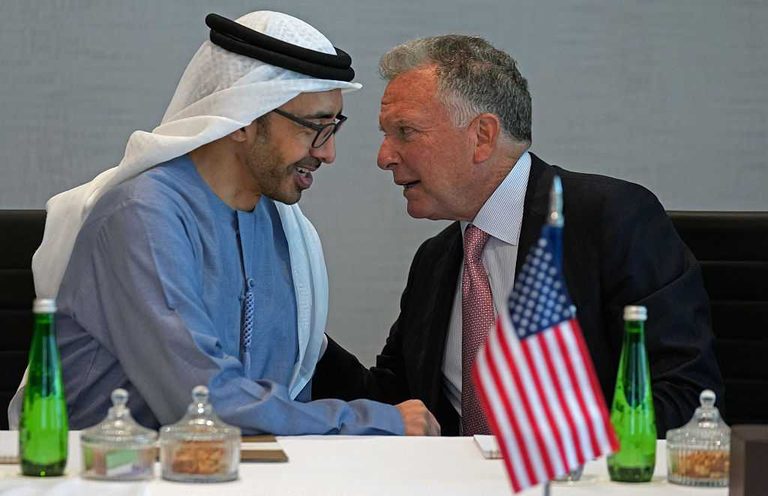
In a breakthrough for humanitarian relief, officials said Wednesday that the United States‑mediated talks in Abu Dhabi resulted in an agreement for the largest exchange of prisoners of war between Russia and Ukraine since the conflict began. The deal, announced by Jared Kushner, President Donald Trump’s son‑in‑law, marks a significant step toward easing the suffering of families on both sides.
Key participants and statements
Vladimir Medinsky, head of the Russian delegation, and Rustem Umerov, who led Kyiv’s delegation, confirmed the planned exchange. Kushner added that the parties will finalize the exact numbers tomorrow, describing the outcome as a “positive” and “biggest humanitarian release of prisoners” to date.
Ukrainian President Volodymyr Zelenskyy called the session “constructive and quite substantive,” noting that discussions also covered the return of Ukrainian civilians held in captivity, including children taken from the country, and security guarantees.
U.S. role and next steps
The Trump administration is positioning the talks as part of its broader effort to revive American‑led peace initiatives that have struggled to produce lasting results. Kushner said he and U.S. envoy Steve Witkoff will travel to Moscow on Thursday to meet President Vladimir Putin, then head to Dublin for a meeting with President Zelenskyy.
U.S. Secretary of State Marco Rubio described the meeting as “very productive,” while cautioning that a comprehensive breakthrough on ending the war will take time.
Context of the negotiations
The Abu Dhabi talks follow a February meeting in Geneva that yielded limited progress. The current negotiations occur against a backdrop of intensified fighting on the front lines, with little territorial change this year. Both Russia and Ukraine continue to launch long‑range missiles and drones, causing civilian casualties and infrastructure damage.
Recent Russian strikes hit the southern Zaporizhzhia region and the eastern city of Kharkiv, wounding seven civilians. Russia’s Defense Ministry reported that its air defenses downed 627 Ukrainian drones overnight, including 150 over the St. Petersburg area, and that a drone attack sparked a fire at the port of Ust‑Luga, injuring three workers.
European involvement and political implications
While Moscow prefers to keep European actors out of direct negotiations, representatives from the European Union, NATO and several European governments were present in Abu Dhabi, consulting with the Ukrainian delegation. Umerov said Kyiv’s team expects to meet with European officials on Wednesday.
The talks also have domestic political relevance for the United States. The Trump administration faces a looming shift in Congress after the midterm elections, with Democrats poised to take control in January. Critics may demand increased aid for Ukraine, but the administration is emphasizing diplomatic progress as a counterpoint.
Outlook
Both delegations have expressed a willingness to move forward with the prisoner exchange, but they have not indicated any change in their core demands regarding territorial issues or security guarantees. The upcoming meetings in Moscow and Dublin will test whether the momentum from Abu Dhabi can translate into broader confidence‑building measures.
For families awaiting the return of loved ones, the agreement offers a hopeful sign that humanitarian concerns are finally receiving focused attention amid the protracted conflict.
Original reporting: WPBF (Treasure Coast / Hearst) — read the source article.