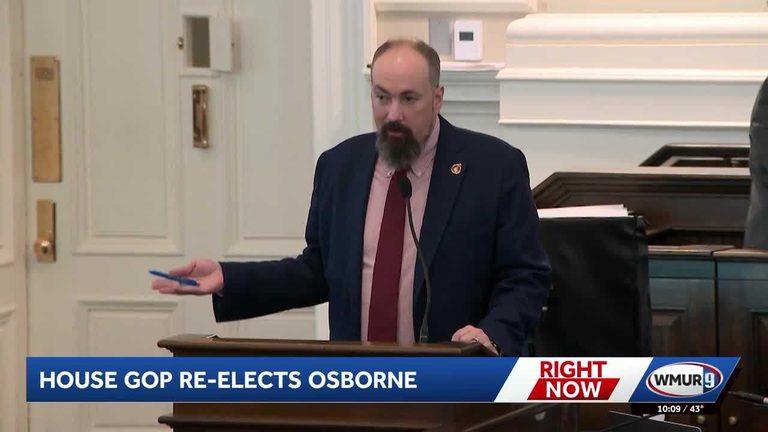
CONCORD, N.H. — In a clear signal of continuity, the New Hampshire House Republican caucus reconvened at the State House on Tuesday and re‑elected Jason Osborne as its leader. Osborne, who has served as the GOP’s majority leader since 2021, will now guide the party as minority leader when the new legislative session begins in December.
Leadership transition amid expected minority status
The caucus’s decision comes as the 2026 mid‑term elections are still being tallied. While final recounts have not yet confirmed the exact partisan split, analysts expect Republicans to hold about 107 of the 400 seats, leaving the party in the minority for the first time in several years. Osborne’s re‑election reflects the members’ confidence that his experience will help the GOP navigate the challenges of reduced legislative influence.
Osborne’s record and priorities
Since taking the majority‑leader role in 2021, Osborne has championed policies that align with traditional family values, religious liberty, and limited government—principles that resonate strongly with New Hampshire’s conservative base. In his remarks after the vote, Osborne thanked his colleagues for their trust and pledged to “stand firm for the Constitution, protect our families, and ensure that individual liberty remains at the heart of every legislative decision.” He emphasized that the party will focus on fiscal responsibility, supporting small businesses, and defending parental rights in education.
Republican caucus outlook
With a smaller caucus, GOP leaders anticipate a more strategic approach to legislation. Osborne indicated that the party will prioritize bipartisan cooperation on issues where common ground exists, such as infrastructure improvements and public safety, while continuing to oppose measures that they view as overreach by the Democratic majority.
State political observers note that the expected 107‑seat count still gives Republicans a significant voice, especially on committees where party ratios can influence agenda‑setting. The leadership team plans to leverage these positions to advance conservative policies and to hold the majority party accountable.
Community reaction
Local constituents expressed mixed reactions. Some praised Osborne’s steady hand, citing his track record of defending constitutional rights and supporting family‑focused legislation. Others urged the caucus to consider fresh leadership that might better address emerging concerns such as affordable housing and rural broadband access. Nonetheless, the vote reflects a clear majority of GOP legislators who trust Osborne’s experience to steer the party through the upcoming session.
What’s next for the New Hampshire House?
The new legislative session will begin in early December, at which point Osborne will officially assume the minority‑leader role. The House will also convene a bipartisan committee to oversee the final certification of election results, ensuring that any remaining recounts are completed transparently.
As the state prepares for this transition, New Hampshire’s citizens can expect continued debate on key issues such as tax policy, education reform, and public safety—areas where the GOP intends to assert its conservative principles while seeking constructive dialogue with Democratic colleagues.
Original reporting: WMUR (Hearst) – local news — read the source article.