Young adults, especially Gen Z, are turning back toward the Roman Catholic Church in surprising numbers, trading “spiritual but not religious” for formal liturgy, community rituals, and a search for moral order; recent surveys and on-the-ground reports show attendance spikes, a surge among young men, big youth gatherings, and new social rituals that mix tradition with modern social life.
What looked like a temporary post-pandemic curiosity has solidified into a clear trend. Tracking groups report that Gen Z now attends church more often than older generations, signaling a measurable shift in religious habits rather than a fad. The typical Gen Z churchgoer in 2025 is showing up nearly every other weekend, a dramatic rebound from 2020.
Data show attendance among young adults doubled compared with 2020 levels, which has churches scrambling to expand seating and programming. Large events are drawing tens of thousands, and parish leaders say these are not one-off spikes but sustained increases in engagement. CATHOLIC CONFERENCE SHATTERS ATTENDANCE RECORDS AS 26,000 YOUNG PEOPLE FLOCK TO FAITH EVENT has become a common headline in parish newsletters and diocesan reports.
The response is not uniform across demographics, though the most striking change is among young men. Recent polling indicates a sharp rise in the number of young men who say religion is very important to them, reversing long-term patterns where women were more likely to express strong religious commitment. That shift makes this movement politically and socially significant because it reshapes a key youth cohort.
In April 2025 a Gallup-style poll showed roughly 42% of young men saying religion is very important, up from about 28% in 2023. For the first time in decades, young men now report higher religious commitment than young women, which analysts say could influence broader cultural trends. POLL FINDS SHARP RISE IN YOUNG MEN CALLING RELIGION ‘VERY IMPORTANT’ has been repeated by commentators tracking the cultural implications.
The revival’s energy is most visible in big cities, where packed pews and overflow crowds have become routine. New York City, in particular, is feeling the effects as parish communities report surging attendance and younger demographics filling services. At St. Joseph’s Church in Greenwich Village the congregation expanded dramatically, and observers described one evening mass in vivid detail.
“Every inch of pew space was filled, mostly with young adults,” a recent Wall Street Journal report noted of the scene. “Latecomers squeezed into makeshift rows of plastic folding chairs or stood shoulder-to-shoulder in the foyer… Others squatted on balcony steps for the 90-minute service.” Those lines paint a picture of cramped but committed crowds who are treating Mass as a weekly destination.
Social life around the faith is changing too, blending old rituals with new forms of outreach and friendship. Events like St. Joseph’s “Pizza to Pews” pre-Mass meetups grew from casual hangouts into organized community moments, swelled by young people willing to travel for the experience. These gatherings turn liturgy into a social anchor rather than just a Sunday obligation.
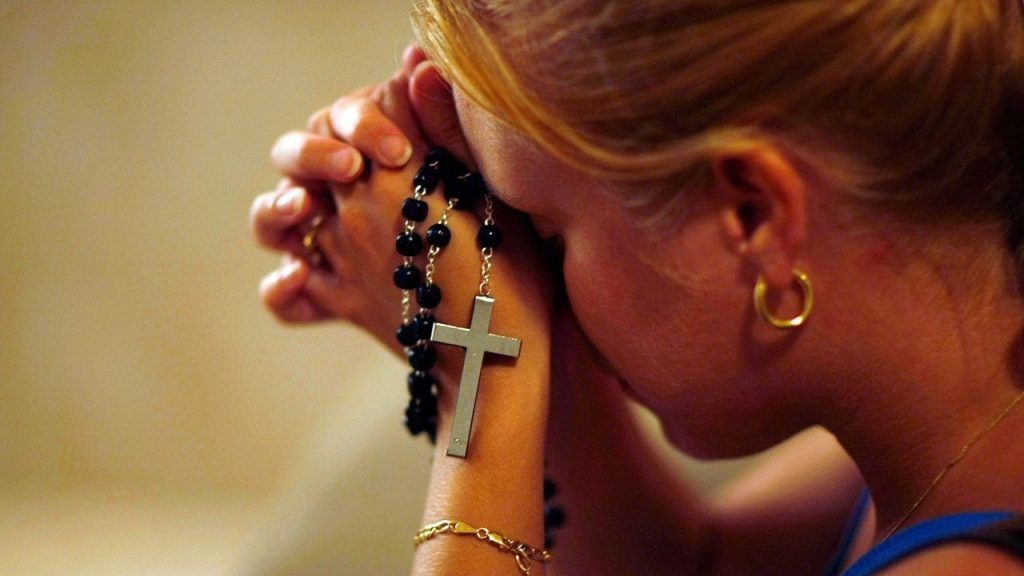
Online movements also mirror the shift toward tradition, with the “Trad” lifestyle trend and viral groups bringing ritual practice into modern social media aesthetics. One example: Isabella Orlando’s “Holy Girl Walk” in Central Park started with 50 participants and ballooned after a video of the Rosary went viral, drawing participants from other cities. At the parish level, clergy say many newcomers prefer more formal liturgies and the Traditional Latin Mass as a clear counterpoint to prevailing campus and corporate values.
The clergy are framing the revival as a response to a deeper search for meaning. “People are looking for more than career and consumption,” Endorf said. “What does it mean to grow up? They’re looking for guidance.” That language captures why longstanding rituals and structured community life feel newly attractive to a generation reevaluating the role of faith in a digital age.