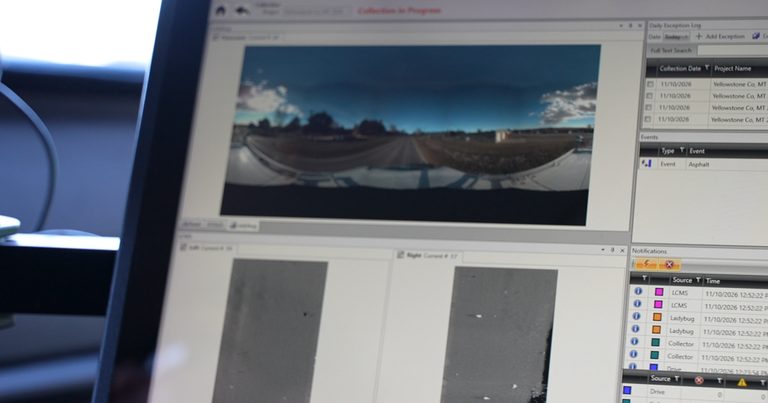
Billings, MT – Yellowstone County has taken a high‑tech step toward smarter road maintenance. A specially outfitted van, the Iris Pro Pave, is traveling county roads at the posted speed limit while using a 3‑D laser scanner, 360‑degree camera and GPS to record the condition of the pavement in fine detail.
How the technology works
Operator Oscar Arambula, a technician with the Local County Maintenance Services (LCMS), drives the van along roughly 400 miles of county routes. As he travels, the roof‑mounted camera captures cracks, potholes and other surface distresses. The core of the system is a 3‑D laser scanner that maps the road surface to a resolution that can measure the depth and width of each defect.
“The system’s doing its job… collecting any type of cracks, potholes, things like that on the road,” Arambula explained. A surrounding 360‑degree camera records the right‑of‑way, while GPS tags each finding to an exact location, ensuring engineers know precisely where a problem lies.
Medical analogy drives the approach
LCMS manager Mollie Rhett likens the process to a doctor’s exam. “If you go to a doctor and just say you don’t feel well, you won’t get a proper diagnosis without checking your symptoms,” she said. “Roads are no different. More information helps engineers match the problem with the right treatment.”
By diagnosing issues before they become severe, the county hopes to avoid costly, blanket repairs that may not address the underlying problem. “The cost savings will come from doing treatments that the roads actually need when they need them,” Rhett added.
From data to dollars saved
After each day’s run, Arambula uploads the collected data to LCMS servers. Within three to four months, pavement engineers review the information, work with project managers and determine which recommendations will become funded projects.
When the county can target repairs precisely, taxpayers benefit from reduced spending on unnecessary resurfacing and from directing limited road dollars to the projects that will have the greatest impact on safety and longevity.
What this means for Billings drivers
Residents can expect a more proactive approach to road upkeep. Instead of reacting to large pothole outbreaks, the county will be able to schedule spot repairs, seal cracks before they widen and apply treatments that extend pavement life. The technology also creates a transparent record of road conditions, giving the public a clearer view of how tax dollars are being spent.
“Generally speaking, within probably four months after collection, that is when the pavement engineers will actually start working with the project manager and will actually start working with the agency,” Rhett said. From that point, Yellowstone County will decide which recommendations become projects and when drivers will see the improvements.
Looking ahead
The laser‑equipped van represents a growing trend among local governments to adopt data‑driven infrastructure management. By leveraging precise, real‑time information, Yellowstone County aims to set a standard for efficient, fiscally responsible road stewardship that other Montana counties may soon follow.
Original reporting: KTVQ Q2 Billings (local) — read the source article.