Election night brought a wave of historic victories for Native American women across tribal, state and federal levels. In the Navajo Nation, Crystalyne Curley fulfilled a childhood ambition by becoming the first woman to serve as president of the largest federally recognized tribe.
Tribal Milestone
Curley, who first imagined a political career during a third‑grade field trip to the Navajo Nation Council, defeated attorney Justin Jones by a narrow margin, according to unofficial results. She also made history as the first female speaker of the Navajo tribal council. After taking office in January, Curley and her running mate Chris Deschene plan to shift the tribe away from coal development and to strengthen its voice in federal Indian policy discussions.
Long‑time council member Lene Bitsui, who supported Curley, admitted she had doubted whether Navajo voters were ready for a female president. “I was wrong, and I feel so happy to have been wrong,” Bitsui said.
State and Federal Firsts
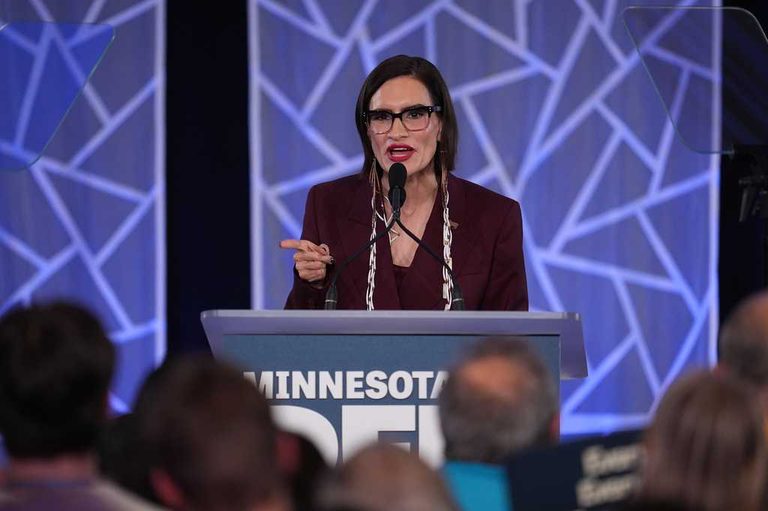
In state politics, Peggy Flanagan, a citizen of the White Earth Nation and former lieutenant governor of Minnesota, became the first Native American woman elected to the U.S. Senate. Flanagan thanked Native women for their support, saying, “I could not run for the U.S. Senate without Native women. I could not exist in the way that I do without Native women.”
Deb Haaland, a member of the Laguna Pueblo, added another milestone by winning the governorship of New Mexico, becoming the first female Native governor in U.S. history. Haaland, who previously served as the first Native American cabinet secretary heading the Interior Department, emphasized her commitment to making life more affordable for struggling New Mexicans and improving the state’s education outcomes.
Broader Representation
The Seneca Nation of Indians in western New York also elected its first woman president, longtime council member Tina Abrams. In the U.S. House, several Native Americans secured seats, including Kansas Democrat Sharice Davids (Ho‑Chunk) and Oklahoma Republicans Josh Brecheen (Choctaw) and Tom Cole (Chickasaw). New York Democrat Claire Valdez (Ysleta del Sur Pueblo) and Michigan Democrat Sean McCann (Citizen Potawatomi Nation) became the first Native Americans to represent their states in Congress.
Advocates like Jordan James Harvill, a Cherokee Nation citizen and strategist with Advance Native Political Leadership, described the results as a “seismic shift” in Native communities. While some Navajo traditionalists argue that cultural teachings discourage women from top government roles, others point to the matrilineal structure of Diné society as a reason to embrace female leadership.
These breakthroughs signal a growing presence of Native American women in public office, challenging long‑standing barriers and offering new perspectives on policy issues that affect tribal nations and the broader United States.
Original reporting: Oklahoma City News Feed (HLL/CB) — read the source article.