Voters in Chicago’s 5th, 8th, 21st and 24th wards overwhelmingly backed an advisory referendum that would tax corporations with 500 or more employees – excluding grocery stores and nonprofits – to fund youth employment, public mental‑health care and violence‑prevention programs. The measure received 3,925 votes in favor and 513 against, representing about 88% of respondents, according to the Chicago Board of Elections.
Mayor Johnson Leverages Results
Mayor Brandon Johnson seized on the vote as evidence that Chicago residents want large corporations and the ultra‑wealthy to contribute more to the city’s budget. In an interview, Johnson said the results demonstrate a “reasonable expectation that the people of Chicago have of our business community” to pay their fair share.
Johnson’s 2027 budget proposal includes a slightly different employer tax: a $25 monthly charge for each Chicago‑based employee at businesses with 125 or more workers. The mayor’s office estimates the tax would generate roughly $100 million annually and affect about 2.8% of registered corporations, helping close an $882 million shortfall without raising property taxes or cutting services.
Aldermen Push Back
Despite the referendum’s strong showing, three of the four aldermen representing the affected wards – Desmon Yancy (5th), Michelle Harris (8th) and Monique Scott (24th) – signed a Tuesday letter reaffirming their opposition to the mayor’s employer tax. Alderman Ronnie Mosley (21st) did not sign.
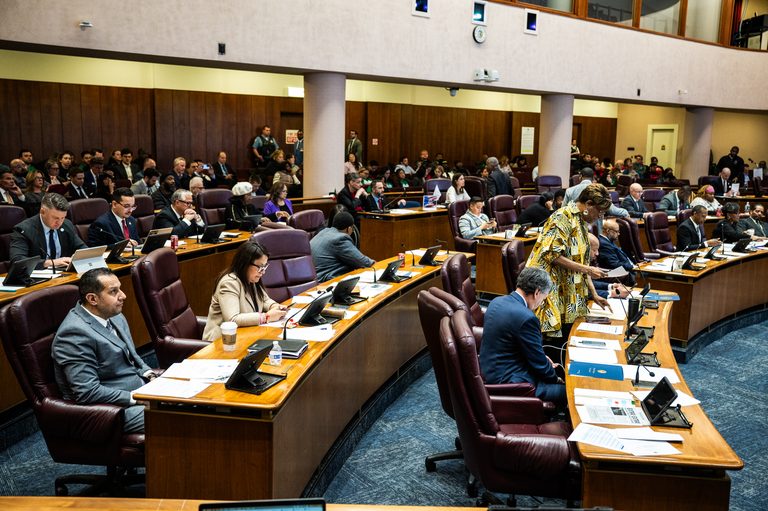
The letter, signed by 28 alderpeople, warned that the 26 votes needed to approve the mayor’s budget “do not exist” and reiterated concerns that the tax could deter business investment. Alderman Scott cautioned that voters may have been confused by the referendum’s wording and emphasized the need for policies that balance investment, job creation and community support.
Mayor Responds
Mayor Johnson replied that his administration is reviewing alternative revenue ideas from aldermen and developing a tax‑credit model for businesses subject to the head tax. He noted that the proposal already includes a rebate for eligible employers in socioeconomically disadvantaged areas and that adjustments have been made after hearing aldermen’s concerns.
When asked about the difference between the mayor’s 125‑employee threshold and the referendum’s 500‑employee threshold, Johnson did not commit to changing the plan but highlighted the existing adjustments and argued that larger corporations should shoulder a greater share of the budget gap.
Historical Context
Chicago previously operated an employer head tax from 1973 until its phase‑out in 2014 under former Mayor Rahm Emanuel. The earlier tax, which applied to firms with more than 50 employees, generated about $25 million annually. Studies of that era showed no clear impact on overall employment, though some research suggests employer taxes can slow growth for smaller or newer businesses.
Mayor Johnson’s proposal aims to avoid those pitfalls by targeting larger firms and offering rebates to businesses that hire workers from disadvantaged neighborhoods.
Next Steps
The City Council rejected a similar corporate head tax proposal last year. With the advisory referendum now on record, the mayor’s office will continue discussions with aldermen and community groups as the 2027 budget moves toward final approval.
Stakeholders, including billionaire investor Michael Sacks – a major donor to several aldermen – have voiced opinions on both sides of the debate. Sacks, who previously advised Mayor Emanuel, has funded advertisements opposing the mayor’s earlier head‑tax plan.
Chicago residents and business leaders will watch closely as the administration balances the need for revenue with the goal of maintaining a business‑friendly environment that supports job growth and community wellbeing.
Original reporting: Block Club Chicago — read the source article.