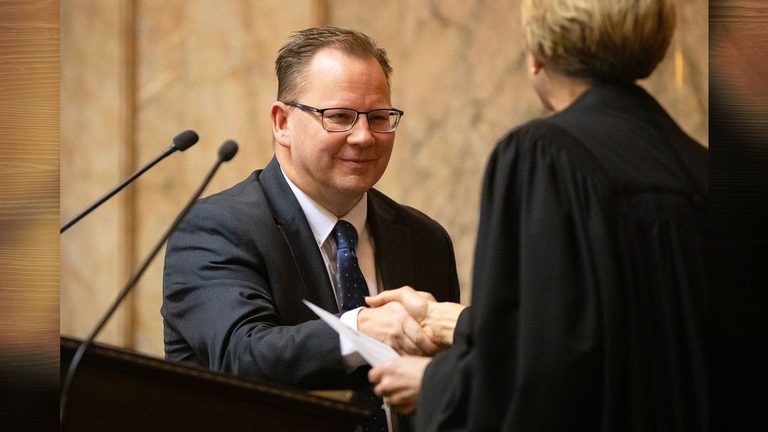
Washington State Superintendent of Public Instruction Chris Reykdal announced Monday that he will not seek re‑election to a fourth term in 2028. Reykdal, a Democrat who first won the nonpartisan post in 2016, said the decision reflects his belief that public offices should be held as a service to the people, not as a personal entitlement.
Reasoning Behind the Decision
“Public institutions are strengthened when leadership changes, new voices emerge, and those entrusted with public office understand that the position belongs to the people, not to the person holding it,” Reykdal said in a statement. He added that, while Washington does not impose term limits on statewide offices, he believes officials should voluntarily set such limits to ensure new energy and fresh ideas.
Future Plans Remain Open
Reykdal said he may consider another statewide office, a federal position, or simply step away from elective office altogether. He declined to comment further on specific ambitions, noting that any decision will be made transparently with his wife, Kim.
Key Priorities for the Next Two Years
Even as he prepares to leave the role, Reykdal emphasized several pressing issues that will dominate his remaining term. He called for additional funding to help cash‑strapped districts, sustainable and equitable school financing, improved student well‑being, higher academic achievement, and accountability for elected officials overseeing public education. He also stressed the importance of ensuring every young person has meaningful opportunities after high school.
Election History and Recent Achievements
Reykdal was narrowly elected in 2016, winning by a single percentage point over Erin Jones. He secured a larger margin in 2020, defeating Maia Espinoza by nearly ten points, and repeated a comfortable victory two years ago against David Olson.
During his tenure, Washington lawmakers and Governor Jay Inslee increased state funding for public schools, bringing the state into compliance with the Washington Supreme Court’s McCleary decision, which required adequate financial support for local districts. However, Reykdal notes that the state has struggled to fully meet that commitment, prompting some districts to consider legal action.
COVID‑19 Aftereffects and Ongoing Challenges
The COVID‑19 pandemic dramatically altered classroom delivery, leaving lasting learning loss, social‑emotional challenges, and a surge in chronic absenteeism. Reykdal highlighted the need to address a youth mental‑health crisis and the exodus of families from public schools that followed prolonged campus closures.
Federal Context: President Trump’s Education Policy
Reykdal also referenced the broader federal environment, noting that President Trump has directed U.S. Secretary of Education Linda McMahon to dismantle the Department of Education. From a conservative‑Christian perspective, this effort to reduce federal overreach aligns with the Constitution’s allocation of education to the states and local communities, empowering families and local leaders to shape curricula and standards without distant bureaucratic control.
Looking Ahead
As Washington’s education system navigates funding shortfalls, pandemic‑related impacts, and a shifting federal landscape, Reykdal’s decision to step aside underscores a commitment to leadership renewal. The coming months will test the state’s ability to secure additional resources, support student mental health, and maintain high academic standards while respecting the role of families and local communities in education.
For parents, teachers, and community members, the focus remains on ensuring that every child in Washington receives a quality education that prepares them for a hopeful future.
Original reporting: Clark County Today (Vancouver WA) — read the source article.