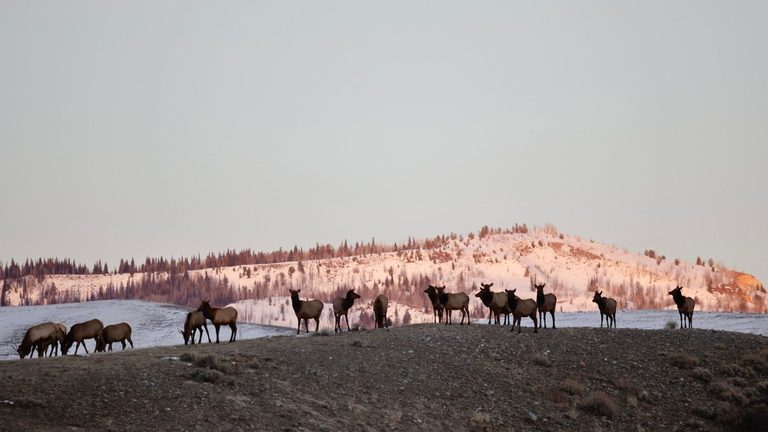
Jackson, WY — The Wyoming Game and Fish Commission released its latest surveillance data showing that chronic wasting disease (CWD) remains a serious threat to the state’s ungulate populations. According to the agency, the disease is present in 71% of elk herds and an alarming 95% of mule deer herds across Wyoming.
Testing results highlight prevalence
During the 2025 hunting season, a total of 3,869 hunter‑harvested animals were submitted for CWD testing. Of those samples, 403 tested positive, representing just over 10% of the tested harvest. The agency’s preliminary figures also estimate that 26,946 deer, 30,568 elk and 338 moose were harvested statewide.
Local hunters feel the impact
Tim Martel, a longtime resident of Moose, shared his recent experience after a mule deer harvested in Deer Hunt Area 156 – a zone east of Grand Teton National Park – returned a positive CWD result. Martel, who has tested all of his and his wife’s kills for the past three years, said the positive result forced him to discard about 85 pounds of meat.
“We were just having a great time… then it turned around and was positive. I literally threw out 85 pounds of meat,” Martel said. He added that many hunters may be unaware of how frequently the disease appears, noting, “If all the hunters here tested, they’d be surprised how often it pops up.”
Agency response and management strategies
Game and Fish wildlife management coordinator Corey Class emphasized that while there is no “silver bullet” for CWD, the agency is employing several strategies to limit spread. These include adjusting hunting seasons, increasing harvest opportunities in high‑prevalence areas such as riparian zones and cultivated lands, and focusing harvest efforts on specific herds like the Paintrock mule deer herd.
Class said, “Eradication is not going to happen, and it may be too early to say this will last long term, but over the last couple of years it appears we may have at least stabilized it for now.” The agency continues to monitor disease trends and evaluate the effectiveness of targeted harvests.
Financial concerns for hunters
Unlike Colorado, which reimburses hunters up to $200 for processing costs when an animal tests positive, Wyoming does not currently offer such compensation. Martel expressed frustration, noting the $40 tag cost and suggesting a potential $40 bonus for hunters who test their harvests.
“I feel like I’m doing the state a service by going out of my way to do this, and I don’t get anything for it,” he said.
Looking ahead
The commission will continue to review CWD data at its upcoming meetings and adjust management tactics as needed. Hunters are encouraged to submit harvested animals for testing, even though it remains voluntary in much of the state, to help provide a clearer picture of disease prevalence.
Original reporting: Buckrail (Jackson WY) — read the source article.