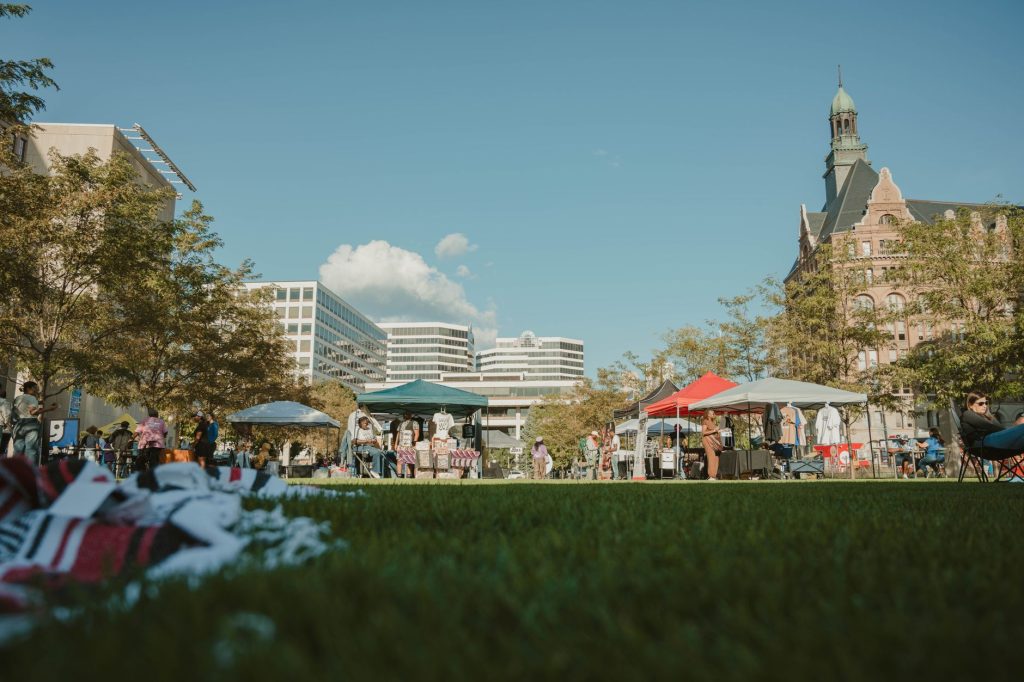
By eight-fifteen on a Saturday morning in late June, the good bread is already gone. That’s the first thing you should know about the Appleton Downtown Farm & Craft Market, which runs along the 100 block of West College Avenue from May through October. If you stroll up at ten with a coffee and an open mind, you’ll find plenty. If you want the sourdough from the Mennonite baker who sets up near the north end, you need to be there when the canopies are still going up.
The market isn’t enormous — maybe sixty vendors on a full Saturday, fewer in early May or late October — which is actually part of why it works. You can walk the whole thing in twenty minutes, or spend ninety if you stop to talk. And people do stop to talk. This is not a market where vendors stare at their phones. The woman selling cut flowers has opinions about dahlias. The guy with the honey samples will explain the difference between his basswood and buckwheat varieties in more detail than you expected to want.
What you’ll find varies pretty honestly by season. Early summer means radishes, lettuces, snap peas, and rhubarb in quantities that make you feel briefly optimistic about cooking. By August it’s tomatoes, sweet corn, zucchini in slightly alarming sizes, and stone fruits trucked up from southern Wisconsin. The last few markets in October lean toward winter squash, root vegetables, and the kind of apple varieties you’ve never seen at a grocery store — Honeycrisp’s weirder cousins, basically.
Beyond produce, there are eggs, cheese, meat, baked goods, jam, dried herbs, handmade pasta, and a rotating cast of craft vendors selling things that are either charming or puzzling depending on your tolerance for hand-stamped jewelry. The craft-to-food ratio stays reasonable, which isn’t something every farmers market manages.
Parking on a Saturday morning downtown is easier than you’d think. The ramp on Appleton Street is usually your best bet; most market visitors don’t bother with it and circle the street looking for meters instead. Walk two minutes and you’re in.
Bring cash. Most vendors accept cards now, usually via Square, but a few don’t, and the ones who don’t tend to be the ones selling things you’ll regret not buying. There’s an ATM nearby but it charges fees that will mildly ruin your morning.
Budget somewhere between twelve and forty dollars depending on whether you’re doing a quick pass for eggs and tomatoes or genuinely stocking the week. The flowers are almost always worth it — a decent-sized mixed bouquet runs seven to ten dollars and lasts longer than the grocery store variety, though you didn’t hear that from me.
The market closes at noon, and the last half hour gets thin. Vendors start breaking down, the energy drops, and whatever was going to sell has sold. The sweet spot is somewhere between eight-thirty and ten-thirty, when the market is busy enough to feel alive but not so crowded that you’re waiting in line for a free honey sample. Come with a bag, comfortable shoes, and no particular agenda. That’s really the whole formula.