During a recent public‑safety committee meeting, Horry County Police Chief Kris Leonhardt unveiled a plan to make the county’s license‑plate reader system more visible to the public. The department will create a Flock Safety Transparency Portal that residents can access by searching “Horry County” on the vendor’s website.
What the portal will show
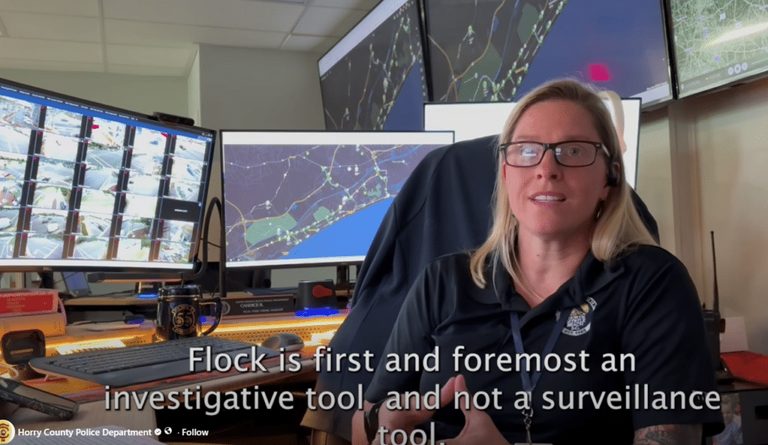
According to Leonhardt’s presentation, the portal will list the number of cameras in operation, explain what the technology does and does not do, and detail the department’s data‑retention policies. It will also publish aggregate statistics such as how many vehicle searches officers run and how often the system generates “hot‑list” alerts for stolen or wanted vehicles. The chief emphasized that the cameras capture only a still image of a vehicle and its plate and do not employ facial‑recognition software.
Limits on the information
Leonhardt noted that the portal will not reveal details that could jeopardize active investigations. “We have a duty to protect ongoing cases,” he said, indicating that certain operational specifics will remain confidential.
Why the portal is being introduced now
The move comes amid growing local concern. A Conway resident’s petition to halt the use of Flock cameras gathered more than 250 signatures by October. Earlier this summer, Horry County Police joined neighboring jurisdictions in a joint video response to resident worries, describing the cameras as a targeted tool for investigations such as recovering stolen cars.
Statewide, the technology has faced scrutiny after misuse incidents in Colleton County, Greer, Mauldin and elsewhere. In one case, a lieutenant was fired after an internal audit uncovered unauthorized searches. The South Carolina Attorney General’s office recently sent a letter to Flock Safety CEO Garrett Langley requesting details on the company’s artificial‑intelligence use, data‑access controls and retention periods, citing the state’s Unfair Trade Practices Act.
Company‑wide push for transparency
Flock Safety itself has been encouraging agencies to publish portals. In August, the company announced that more than 1,500 agencies had already done so and urged the remainder to follow suit. The same announcement reduced the recommended data‑retention window from 30 days to seven and required all law‑enforcement customers to enable an “Audit Assistance” misuse‑flagging tool by the end of 2026.
What residents should watch for
Beyond search counts, the most telling part of the portal may be the list of partner agencies that can query Horry County’s cameras. The system allows agencies to share data across state lines, and the portal will show which outside entities—ranging from neighboring North Carolina towns to university police departments—have access.
Privacy advocates, including the ACLU, have praised the shorter seven‑day retention period but argue it should be reduced further to 48 hours. They also warn that new tools for preserving records in active cases could extend the lifespan of location data beyond the headline number.
Real‑world impact
Local users have already seen benefits. A Horry County woman reported that a Flock camera helped Conway police identify the driver who sideswiped her vehicle in September. Nationally, Flock claims its system flagged more than 20,000 stolen vehicles and over 1,000 missing persons in July 2026, though those figures come from the company itself.
While the portal provides a window into the system’s operation, it does not guarantee that every search was justified. A count of 400 searches in a month, for example, tells little about the merit of each individual query. Residents are encouraged to use the portal as a tool for oversight and to continue engaging with local officials about privacy safeguards.
Original reporting: MyrtleBeachSC News — read the source article.