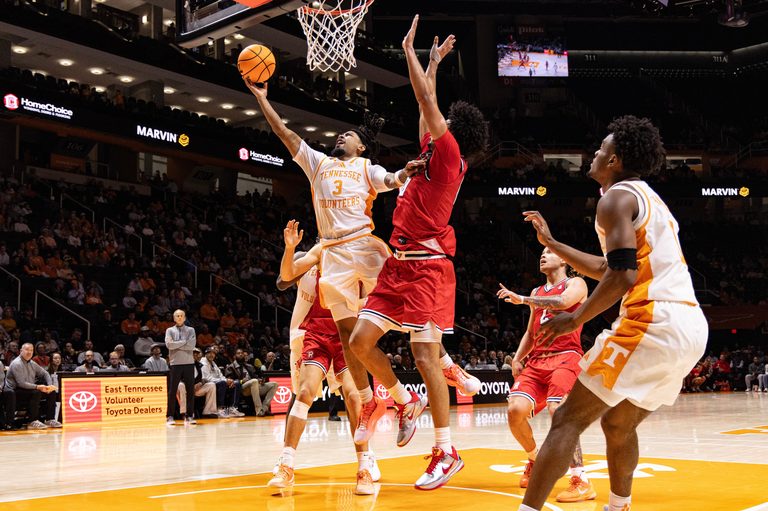
University of Tennessee basketball players have taken a leading role in shaping a model collective‑bargaining agreement (CBA) for college athletes. In partnership with the advocacy group Athletes.org, the Volunteers’ freshman forward DeWayne Brown II and teammates Tyler Lundblade and Campbell Duncan helped craft a term‑sheet that outlines how player compensation, transfer rules and academic standards could be standardized nationwide.
Local leadership backs the proposal
Unlike many past attempts that lacked institutional support, the Tennessee model was developed with the explicit backing of athletic director Danny White. White, a former Notre Dame player and longtime administrator, called the current system “intellectually dishonest” for treating athletes as unpaid labor while allowing them to profit from name, image and likeness (NIL) deals.
“We’re paying them to play sports,” White said. “We lost several antitrust cases that forced us to recognize athletes as employees. This model accepts that legal reality and offers a more efficient way to build rosters.”
Key features of the model
The proposed agreement would replace the patchwork of school‑by‑school rules with a universal framework that sets salary floors and caps, eliminates the use of NIL deals as recruiting inducements, and creates a central employment entity similar to Major League Soccer’s structure. Under the model, NIL agreements would be folded into a salary structure, and schools would be required to adhere to spending limits.
Current NCAA rules prohibit direct payment for playing, allowing schools to claim that athletes are only compensated for promotional activities. The Tennessee plan challenges that notion, arguing that athletes should receive direct compensation for their on‑field contributions.
Broader context and legislative backdrop
The effort comes as courts have increasingly sided with athletes on transfer rights and NIL compensation, and as Congress considers the Protect College Sports Act, which passed the Senate and awaits House action. While the legislation does not directly address the employee status of athletes, it signals growing federal interest in reforming college sports economics.
Randy Levine, president of the New York Yankees and a consultant on the bill, warned that any lasting change would likely require adjustments to the National Labor Relations Act and related state statutes.
Next steps and potential impact
Athletes.org hopes the Tennessee model will serve as a template for other programs. The group plans to seek formal adoption by individual schools and eventually by athletic conferences, pending legal clearance and congressional action.
“This shows that athletes can organize and propose realistic solutions,” said Athletes.org executive director Brandon Copeland. “It’s a stepping‑stone for other teams to follow.”
Original reporting: Action News 5 WMC (Gray) — read the source article.