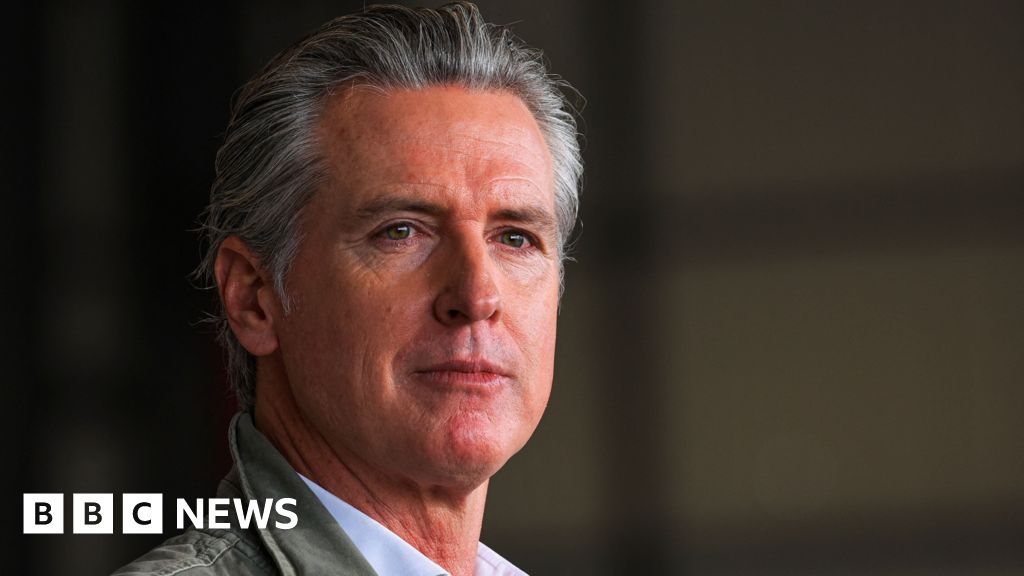
California Governor Gavin Newsom sent an open letter to residents this week outlining a sweeping criminal‑justice reform: every death‑row inmate in the state would have his or her sentence commuted to life in prison without the possibility of parole. The proposal would affect all 548 prisoners currently on death row, including several high‑profile serial killers and murderers.
Governor’s rationale
Newsom said the decision reflects his three‑decade record of opposing state‑sanctioned executions. He argued that the death penalty is costly, inconsistently applied, and at odds with a justice system that should focus on rehabilitation and public safety rather than retribution.
Notable cases on the list
The list includes notorious offenders such as Randy Steven Kraft, known as the Southern California Strangler, who was convicted of 16 murders and linked to at least 29 more. Kraft’s case dates back to the 1970s and 1980s, when he targeted hitchhiking men and was caught after a dead body was found in his car.
Another high‑profile inmate is Michael Gargiulo, convicted of the 2001 murder of Ashley Ellerin and the 2008 killing of Maria Bruno. Gargiulo, who maintains his innocence, was sentenced to death in July 2021.
Serial killers Charles Ng and Leonard Lake, responsible for a series of sex‑slavery murders in the mid‑1980s, also appear on the list. Ng was convicted of killing six men, three women and two infants; Lake died by suicide during police questioning.
Other cases include Chester Turner, a former pizza delivery driver convicted of ten murders in 2007 and four additional killings in 2014, and Richard Allen Davis, the kidnapper and murderer of 12‑year‑old Polly Klaas, whose case helped spur California’s “three‑strikes” law.
Law‑enforcement and prosecutorial response
Orange County Sheriff‑Coroner Don Barnes condemned the plan, saying it “spares the state’s most heinous criminals from the full accountability determined by juries of their peers.” County District Attorney Todd Spitzer called the governor “ashamed of himself,” adding that “the voices of criminals are louder than the cries of victims.”
Los Angeles County District Attorney Nathan Hochman described the proposal as a betrayal of victims’ families, emphasizing that prosecutors “make a promise” to those families when they bring cases forward.
Calaveras County Sheriff Rachelle Whiting expressed disappointment, noting that the local Cold Case Task Force relies on donations for costly forensic DNA analysis that helps bring closure to victims’ families.
Sonoma County Sheriff Eddie Engram warned that the decision “undermines confidence in our judicial system” and forces families to relive painful memories.
Legal and procedural considerations
For the 382 inmates with multiple felony convictions, any commutation would require review by the California Supreme Court. The governor’s plan does not automatically erase the convictions; it merely changes the sentencing outcome.
Advocates of the death penalty argue that the change would diminish deterrence and deny justice to victims, while abolitionists contend that the death penalty is morally wrong, financially burdensome, and prone to error.
What’s next?
Newsom’s proposal will be debated in the state legislature and reviewed by the courts. If enacted, California would join the growing list of states that have abolished capital punishment, reinforcing a national trend toward life‑without‑parole sentences as the ultimate penalty.
Stakeholders on all sides will continue to voice their perspectives as the state grapples with this historic shift in criminal‑justice policy.
Original reporting: KRDO (Colorado Springs metro) — read the source article.