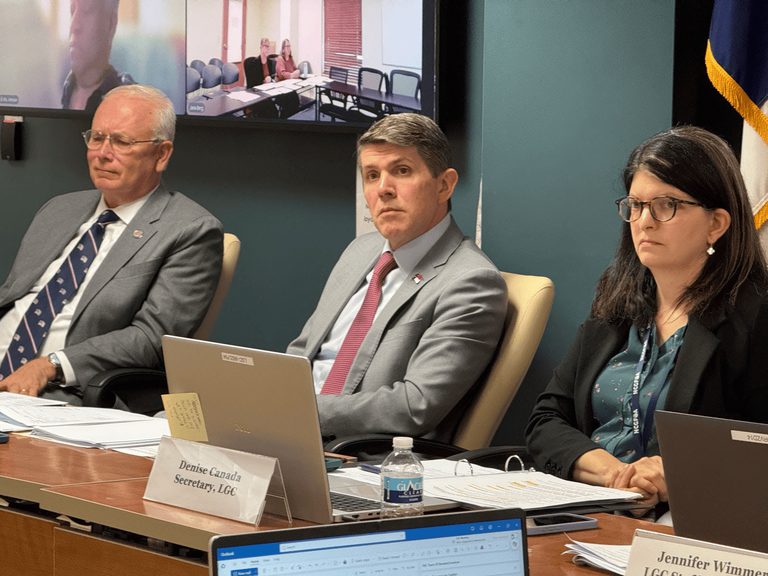
The North Carolina Local Government Commission (LGC) is intensifying its review of two struggling towns—Rowland in Robeson County and Ronda in Wilkes County—after taking them over last month. Staff have been gathering bank records, conducting site visits and coordinating with state agencies to determine whether either community can be rescued or should be dissolved.
Rowland’s fiscal challenges
Rowland, a town of just under 900 residents near the South Carolina border, has failed to meet eight financial criteria used by the LGC, including population trends, property valuation, fund balances and audit compliance. Its available fund balance has been shrinking each year since 2022 and posted negative balances for fiscal years 2024 and 2025. Repeated audit delays since 2021 and findings of overspending—particularly the use of restricted grant money for routine operations—have further eroded confidence.
The town’s water and sewer fund has run a deficit for five consecutive years, draining resources that should support essential services. LGC commissioners expressed grave concern, with one noting, “I didn’t really see anything positive,” and Secretary Denise Canada adding, “Things are not looking good at all for the town of Rowland.”
Ronda’s financial picture
Ronda, home to about 400 residents, faces a similar but slightly less severe situation. Its fund balance remains positive but is dwindling, and the water and sewer fund has been in the red for four years. Property tax rates have fallen from 0.4 in 2013 to 0.25 in 2025, a trend that threatens revenue stability.
Governance issues compound the fiscal strain. The mayor’s office is currently held by Kevin Reece, but the town has experienced three mayoral resignations between April 2025 and June 2026, leaving several key positions vacant. State Auditor Dave Boliek’s October 5 report labeled Ronda’s financial condition as “significant and deteriorating.”
State officials stress taxpayer protection
State Treasurer Brad Briner emphasized the need for responsible stewardship, saying, “People in Ronda and Rowland deserve local governments that can pay their bills, manage taxpayer dollars responsibly and provide the services residents depend on.” He added that the LGC’s priority is to protect taxpayers while exploring every viable option.
Potential outcomes
The LGC will present a comprehensive financial‑assessment report, a services review and possible remediation options by next month. A recommendation for dissolution could be tabled at the Dec. 1 meeting. If dissolution proceeds, the commission will work with neighboring governments to transition assets, liabilities and essential services.
Since 1931, the LGC has taken over 14 municipalities, dissolving only one—East Laurinburg in June 2022. Currently, 153 units appear on the commission’s Unit Assistance List, reflecting a growing trend of financially distressed localities. Commissioner Canada urged other towns in precarious positions to consider voluntary dissolution, noting that unincorporated status is not “an inferior state of being” and that roughly 40% of North Carolinians live in unincorporated areas.
Commission staff continue to monitor local governments’ compliance with Chapter 159 and will keep the public informed as the situation develops.
Original reporting: Carolina Public Press — read the source article.