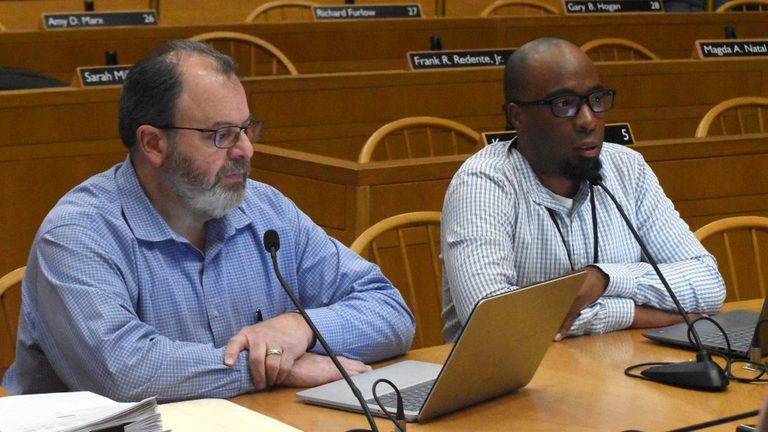
The New Haven Board of Alders Finance Committee moved forward on Monday night with a proposal to issue up to $17.5 million in bonds to pay the settlement owed to Adam Carmon. The settlement, announced on Oct. 22, totals $16.5 million for the man who spent 28 years in prison before his murder conviction was vacated.
Bonding plan presented
City Controller Michael Gormany and Acting Budget Director Ron Gizzi briefed the committee on two financing routes: a public bond offering, which could carry higher interest rates, or a direct bank issuance, which might involve up‑front costs of up to $1 million. Gormany asked aldermen to authorize a bond amount “not to exceed $17,500,000” to cover any additional bank‑related expenses.
Cost impact
The Elicker administration submitted a Debt Service Impact Statement estimating that interest over the next 20 years could add $8.75 million to the total cost, bringing the long‑term outlay to roughly $26.25 million.
Alternative options discussed
Westville Alder and Finance Committee Chair Adam Marchand questioned whether the city had explored other avenues, such as using the fund balance or creating a special levy to spread the cost across taxpayers. Gizzi noted a special levy could be attached to the budget process to minimize administrative overhead, while also acknowledging that relying on the fund balance would strain cash flow.
Marchand raised concerns about the city’s capital‑funding schedule, noting that the upcoming FY 27‑28 budget is a capital‑bonding year. He warned that diverting borrowing capacity to the settlement could delay infrastructure projects, including school‑facility upgrades.
Fiscal rating considerations
East Rock Alder Anna Festa asked how additional borrowing might affect New Haven’s credit ratings. Gizzi cautioned that persistent borrowing could eventually hurt the city’s ratings, though rating agencies might view wrongful‑conviction settlements differently from routine spending.
Festa also reminded the committee of the city’s rainy‑day fund and the state’s reserve, underscoring the need for prudent fiscal stewardship.
Committee vote and next steps
Despite the concerns, the Finance Committee voted unanimously to advance the bonding authorization for further review by the full Board of Alders. The proposal now moves to a final vote, where aldermen will decide whether to proceed with a public offering, a bank issuance, or an alternative financing method.
The Carmon settlement joins recent wrongful‑conviction settlements for Vernon Horn and Marquis Jackson, which were also funded through municipal bonds. City officials warned that additional lawsuits—such as the appeal of a $38 million jury award for Stefon Morant and pending claims from George Gould, the family of Ronald Taylor, and others—could increase the fiscal pressure on New Haven.
Background on the Carmon case
Adam Carmon was convicted in 1994 for the shooting that killed seven‑month‑old Danielle Taft and left her grandmother, Charlene Troutman, paralyzed. After maintaining his innocence, a 2022 ruling by Superior Court Judge Jon Alander overturned the conviction, citing suppressed evidence and a recanted confession from another suspect. Judge Alander wrote, “How could anyone have confidence in a verdict of guilty in a case such as this?” and told Carmon, “The criminal justice system failed you.”
The settlement aims to compensate Carmon for the profound injustice he endured while addressing the city’s broader liability for wrongful‑conviction claims.
Original reporting: New Haven Independent — read the source article.