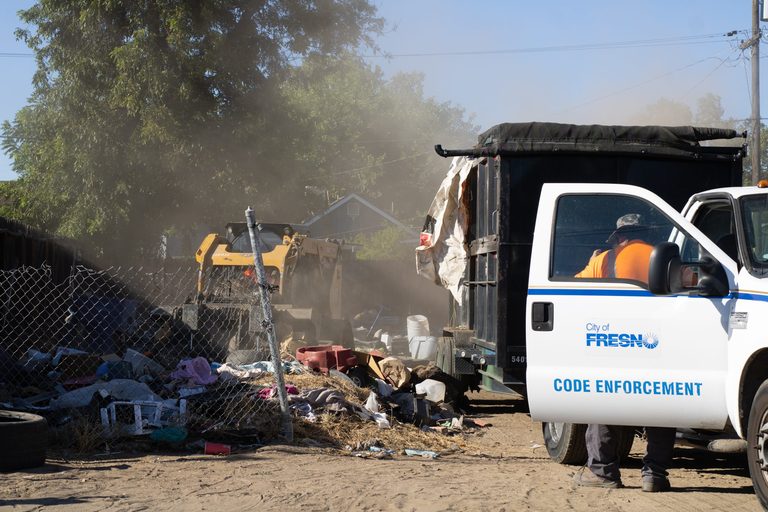
Fresno city officials announced a budget increase for the Homeless Assistance Response Team (HART), adding a second team to provide seven‑day‑a‑week coverage. The expansion, approved in the latest municipal budget, reflects Mayor Jerry Dyer’s continued commitment to a more compassionate approach to homelessness, shifting resources from enforcement toward outreach and services.
Background on HART
In 2022, Mayor Dyer introduced HART as a “compassionate and responsive” alternative to traditional encampment sweeps. The team combines city police sergeants, code‑enforcement officers, outreach workers from the Poverello House HOPE program, and the solid‑waste division. Its stated mission is to engage unhoused residents, provide sanitation, mobile showers, and connect individuals with shelter and housing resources before any enforcement action is taken.
Funding and Staffing
The original proposal called for one police sergeant, four officers, five leased vehicles, and related equipment at a cost of roughly $290,100 in personnel expenses plus $183,000 for vehicles and equipment. The adopted budget reduced personnel costs to $158,537 for five new hires. The recent expansion adds a second team, funded at a comparable level, to ensure coverage every day of the week.
Advocates’ Concerns
Housing advocates, including longtime activist Brandi Nuse‑Villegas, argue that HART has not lived up to its promise. They cite continued use of force, the disposal of personal belongings, and inconsistent application of city policies. “There is a discrepancy between what officials say publicly and what HART actually does,” Nuse‑Villegas said.
Critics also point to recent data: homelessness rose about 7% in 2023 compared with the 2022 point‑in‑time count, while available shelter beds fell 25% from 5,101 to 3,814. They worry that additional law‑enforcement staffing may not be the most effective investment for long‑term solutions.
City Response
Assistant Director of Planning and Development Phil Skei emphasized that HART’s primary role is outreach, with police officers serving only as backup during sweeps. He noted that HART responds to service requests submitted through Fresno’s 311 system or the FresGO app, evaluating each request based on location, size, and jurisdiction.
When an encampment is on public property, HART can remove it without advance notice, though the HOPE team still attempts outreach first. On private property, owners must request cleanup and are responsible for any associated costs. Larger encampments (10 or more people for at least 10 days) trigger a seven‑day notice to both property owners and residents, though Skei said such sites are relatively rare.
Operational Highlights
In 2025, HART handled 9,395 service requests across public and private properties and coordinated with multiple city agencies. The team also conducts informal quarterly counts of unhoused individuals to track trends and target resources.
According to a recent state grant application, HART employs a “non‑enforcement model” that prioritizes safety, cleanliness, and resident engagement. The grant describes ongoing sanitation, mobile showers, and supportive services designed to stabilize encampments until residents transition to permanent housing.
Looking Ahead
Mayor Dyer reiterated the city’s goal of providing resources before any enforcement action. “Our outreach and all services are offered before we consider moving anyone,” Skei said. The administration plans to monitor the impact of the expanded team and adjust strategies based on data and community feedback.
While advocates continue to call for greater transparency and accountability, city officials maintain that the expanded HART budget reflects a genuine effort to address homelessness with compassion and practical support.
Original reporting: Fresnoland — read the source article.