CHEEK, Texas – ExxonMobil has received approval from the Texas Railroad Commission to begin a carbon‑capture and storage project that will pump carbon dioxide deep underground near the unincorporated community of Cheek, just west of Beaumont. The permit, granted in September, marks one of the first such projects slated to operate in the state.
Local residents voice safety worries
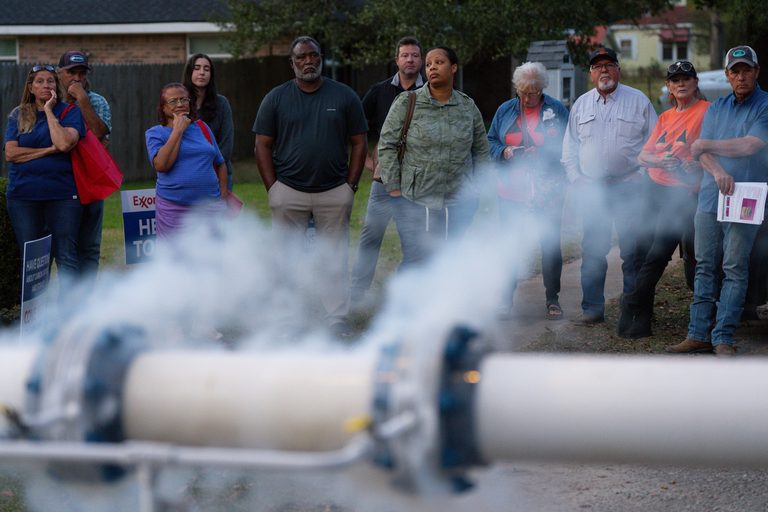
Cheek is a small, working‑class community with a majority Black population, many of whom are elderly. Residents say they do not trust the company’s assurances that the injection will protect drinking water and air quality. “We’re just shocked that they would want to do this so close to homes,” said Douglas Cormier, 67, president of the Cheek Texas Community Association.
Community members fear that a leak could contaminate groundwater with acidic CO₂ or metals, or that a pipeline rupture could release the gas into the air, creating a suffocation hazard. They also worry that local emergency responders lack the equipment and training to handle a potential incident.
Regulatory background and industry perspective
The Texas Railroad Commission, which oversees oil and gas operations, secured authority last year to regulate carbon‑storage wells and approved ExxonMobil’s permit after a federal permitting process. State Rep. Drew Darby, chair of the House Energy Resources Committee, has urged the agency to move carbon‑capture projects forward “at utmost pace while protecting the public.”
Supporters argue that carbon‑capture and storage is a vital component of an “all‑of‑the‑above” strategy to reduce emissions. Federal tax credits are available to encourage such projects, and Texas offers existing CO₂ pipeline infrastructure, suitable geology, and nearby industrial users who could pay for storage.
Company safeguards and community outreach
ExxonMobil says the permit requires automatic shut‑off systems, continuous monitoring of the underground CO₂ plume, and a 24‑hour hotline for operators. The company also sponsors emergency‑training programs through the Texas A&M Engineering Extension Service.
Senior Vice President Dominic Genetti wrote in a blog post that the company aims to “operate responsibly, communicate openly, and put safety first every day.” However, residents note that ExxonMobil has not held a community meeting since the permit was issued, prompting criticism from Railroad Commission Chair Christi Craddick, who urged the company to provide more information and even a fire truck if needed.
Expert and advocacy viewpoints
Environmental groups and some scientists caution that carbon‑capture may be a distraction from broader climate solutions. Harvard professor Naomi Oreskes called the technology “mostly a dangerous distraction.” A joint investigation by Drilled and ProPublica concluded that CCS would require far more resources than currently feasible to meaningfully curb warming.
Lawyers from the nonprofit Earthjustice, which represents the Cheek Texas Community Association, argue that the permit does not require sufficient monitoring of the underground plume or adequate protection of local water supplies. They contend that the project sets a precedent for future wells located near residential areas.
What’s next?
The case is expected to move through a state administrative hearing, where the community will present its safety concerns. The Railroad Commission maintains that it has a strong record of protecting drinking water while regulating injection wells, but the agency’s history of industry‑related incidents has drawn criticism from watchdog groups.
As Texas continues to explore carbon‑capture options, the Cheek project highlights the tension between economic development, environmental stewardship, and the safety of local neighborhoods.
Original reporting: Texas Tribune (HLL/CB) — read the source article.