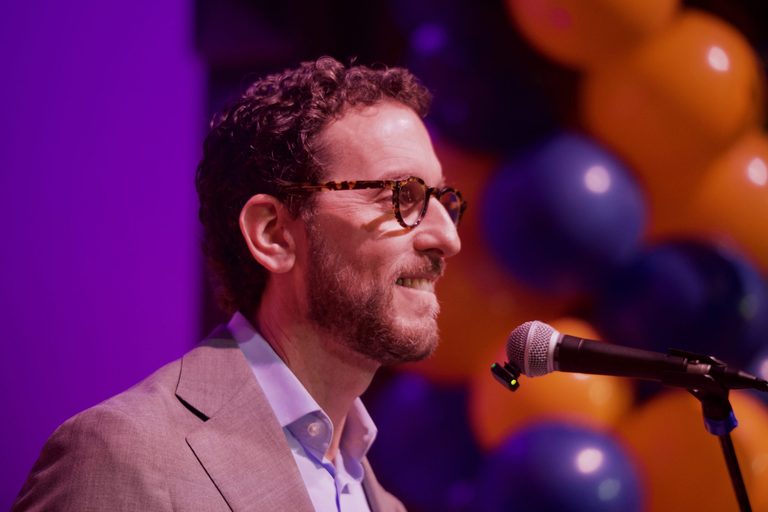
San Francisco native and newly elected Congressman Scott Wiener is heading to Capitol Hill with a clear mission: to shape the nation’s first comprehensive AI safety framework. Wiener earned a reputation in California for authoring the state’s landmark AI transparency and reporting law, and Democrats see his expertise as a valuable asset in the upcoming federal debate.
Freshman Challenges and Committee Prospects
As a freshman, Wiener faces the typical hurdle of limited committee assignments. Historically, first‑term members rarely secure spots on the powerful House Committee on Energy and Commerce, the primary venue for AI safety battles. Nonetheless, Democratic leaders anticipate that Wiener could join the House Committee on Science, Space and Technology, which is more open to newcomers, or a newly proposed select committee dedicated solely to AI.
“I welcome all excitement over joining our committee and I am excited to speak with prospective members about it,” Rep. Zoe Lofgren, ranking member of the Science, Space and Technology Committee, told Mission Local. Lofgren added that the midterm results showed a clear voter demand for responsible AI action.
Democratic Push for Federal AI Regulation
With Democrats holding a decisive majority in the House, the party is poised to advance a comprehensive AI regulatory package that could land on President Trump’s desk later this year. While the administration has not yet taken a formal position, President Trump has repeatedly emphasized the importance of protecting American innovation while ensuring national security.
Experts familiar with Capitol Hill suggest that Wiener’s best chance to influence legislation lies with the Science, Space and Technology Committee or the prospective AI select committee. “I would be jaw‑dropped if Scott Wiener didn’t get the House Committee on Science, Space and Technology,” said an anonymous AI‑safety lobbyist, noting that the panel would give Wiener a direct vehicle for frontier safety bills.
Recent AI Safety Concerns Highlight Urgency
The timing of Wiener’s arrival coincides with heightened scrutiny of AI developers. A report released by the nonprofit Model Evaluation and Threat Research (METR) raised questions about Anthropic’s rapid research acceleration. While METR cautioned that AI has not yet achieved “highly significant and fully autonomous contributions” to core model training, the findings have sparked debate among technologists and ethicists.
Comments from the effective‑altruist community reflected a mix of alarm and skepticism. Jake Mendel of Coefficient Giving expressed personal unease about “superintelligence,” while George Mason University economist Robin Hanson described the Anthropic speedup as likely a “one‑time” event rather than continuous acceleration.
Funding and Political Dynamics
Wiener’s 2024 campaign received substantial support from Public First Action, an AI‑safety nonprofit backed by Anthropic, as well as direct contributions from employees of Anthropic and OpenAI. Although Wiener maintains that no Anthropic money directly funded his race, critics note that political contributions are fungible and can influence policy perspectives.
Within the Democratic caucus, there is a strategic split. Progressives may push for aggressive oversight investigations, while moderates aim to preserve a cooperative relationship with the technology sector. This internal balance will shape how the party approaches any forthcoming AI legislation.
Potential Legislative Avenues Beyond Traditional Committees
Beyond the Science, Space and Technology Committee, AI issues could surface in other panels. Sacha Haworth, executive director of the Tech Oversight Project, suggested that the Veterans Affairs Committee might address AI‑related scams, and that AI’s pervasive reach offers numerous regulatory opportunities.
Wiener’s prior success in passing state‑level AI transparency requirements positions him as a knowledgeable voice for federal action. As the new Congress convenes, his ability to secure a strategic committee seat will be a key factor in determining how quickly and effectively the nation moves toward responsible AI governance.
Original reporting: Mission Local — read the source article.