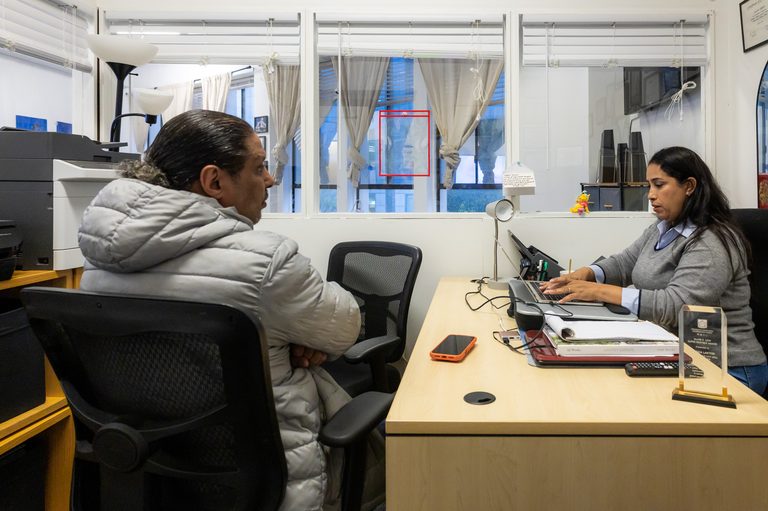
Four Arabic‑speaking women attending a free ESL class at the Tenderloin Family Housing building on Turk Street discovered that the library‑card application, like most city forms, is only available in English, Spanish and Chinese. The San Francisco Public Library does offer Arabic books and media, but the paperwork barrier remains.
Language access gaps in city services
Residents say they encounter similar obstacles when using Muni, where none of the four languages displayed on bus stops includes Arabic. While state law obligates courts and health facilities serving MediCal or Medicare patients to provide interpreters, there is no guarantee for services such as affordable housing or food assistance.
Soha Abdou, resident services director at 201 Turk, estimates that nearly half of the building’s 500 tenants speak Arabic, many with limited English ability. City census data shows about 4,000 Arabic speakers in San Francisco, with just over 1,000 classified as having limited English proficiency.
The city’s Language Access Ordinance requires translation for a language only when at least 6,000 residents speak it and have limited English proficiency. Arabic falls short of that threshold, as do Slavic languages, Korean and Haitian Creole.
Community leaders call the count a “laughable” underestimate
Batool Alawadi, a community organizer with the Arab Resource and Organizing Center, says the census figure of 1,000 is far too low. Her nonprofit assists roughly 1,000 monolingual Arabic clients each year, and she has observed a steady influx of newcomers seeking immigration paperwork help.
Recent years have seen a surge of Arabic‑speaking families moving into the Tenderloin, drawn by affordable rent, nearby mosques and familiar shops. “The neighborhood gives you a feeling of back home,” Abdou said.
Housing and daily life challenges
Many families live in cramped studio apartments. Soumia Laktebi, founder of the Maram Foundation, which translates applications for Arabic speakers, reports that 90% of her 120+ clients reside in the Tenderloin. She notes the lack of Arabic flyers for affordable housing and the absence of Arabic‑language workshops as major obstacles.
Maram, launched in July 2025, helps clients apply for affordable housing, food stamps and in‑home medical support. Laktebi, formerly with the Bill Sorro Housing Program before its 2025 funding cuts, emphasizes that high rent forces families into crowded conditions.
School system hurdles
Arabic is the fifth most common language among San Francisco students, yet monolingual parents struggle to engage with schools. Radwa Hussein, Arabic‑speaking family liaison at Tenderloin Community School, works with about 50 families, translating at parent‑teacher conferences, student testing and even in classrooms.
She reports that many Arabic‑speaking students fail state tests because they cannot read the instructions. Approximately 30% of the 3,000 students at nearby Redding Elementary speak Arabic, but recent district budget cuts eliminated the two Arabic‑speaking teachers who had been assigned there.
Potential paths forward
The city’s Office of Community Engagement and Immigrant Affairs relies on census data but is open to alternative surveys. Lowering the translation threshold has happened before: in 2024 the city reduced the requirement from 10,000 to 6,000 limited‑English‑proficient speakers, adding Tagalog and later Vietnamese to the list.
Advocates argue that a similar amendment for Arabic would improve access to essential services and support the growing community, aligning with the city’s broader commitment to language equity.
Original reporting: Mission Local — read the source article.