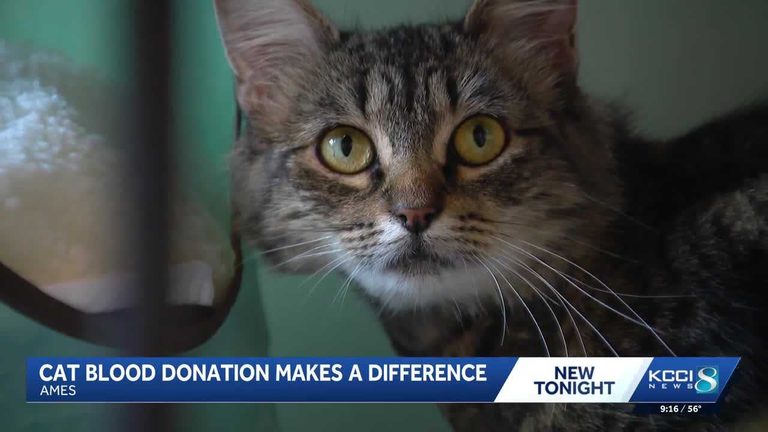
Warren County, Iowa – A local rescue cat named Fawn, mother of three kittens, was saved last month thanks to a blood transfusion from Iowa State University’s feline blood donor program. The life‑saving donation came after Fawn was diagnosed with septic peritonitis, a serious infection of the abdominal cavity.
Critical condition and emergency surgery
Fawn arrived at the Warren County rescue in critical condition, with low hemoglobin, rapid breathing, and a high temperature, according to Corissa Arndt, president of the nonprofit Whiskers TNR. Within a week, her condition worsened, prompting a referral to Iowa State’s Small Animal Hospital.
Dr. April Blong performed exploratory surgery and discovered a free‑floating grass awn in Fawn’s abdomen, which had caused the septic peritonitis. “We determined that she had something called septic peritonitis, which is a very serious and life‑threatening condition,” Dr. Blong told KCCI.
Blood transfusion gives her a chance
With a 50‑50 chance of survival, Fawn received a blood transfusion from the university’s feline donor program. The transfusion stabilized her, allowing the surgery to succeed and the cat to recover.
Shortage of feline blood supplies
Dr. Blong noted a national shortage of both canine and feline blood products, making timely access difficult. “A lot of times it’s weeks from the date we order a product to when we can receive it,” she said.
The university’s program allows eligible cats to donate approximately every eight weeks. Currently, two rescue cats live on‑site and donate regularly, and Dr. Blong hopes to expand the donor pool to six cats.
How the community can help
Whiskers TNR is seeking additional support after Fawn’s emergency surgery, which cost over $10,000. “We lose money on every adoption,” Arndt explained. “She’s going to be adopted for $100. Her care was over $10,000.” The organization is hosting its annual fundraiser on Saturday, Nov. 14, and encourages community members to financially foster cats or enroll eligible felines in the donor program.
For those interested in becoming a feline donor, eligibility requirements are available through Iowa State University. The program does not accept one‑time donations because cat blood deteriorates quickly, even when refrigerated.
Original reporting: KCCI Des Moines — read the source article.