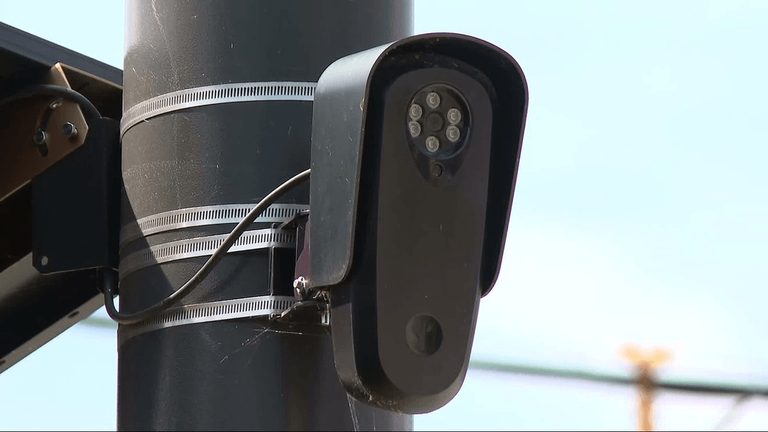
CHARLESTON, W.Va. – As the 2027 West Virginia legislative session approaches, state delegates are demanding stronger privacy protections for AI‑powered surveillance cameras that monitor public spaces. Lawmakers have raised concerns about who can view the footage, how long data is stored, and whether federal agencies will have unrestricted access.
Delegates question federal access and pattern‑of‑life searches
“My biggest concern at this point is pattern‑of‑life searches when crimes have not been committed,” said Delegate Ryan Browning. “I’m not thrilled about federal agencies having access to these systems because they’re not following the same rules as some of the other agencies.” Browning’s remarks reflect a broader unease among legislators about potential overreach.
Since August, the General Assembly’s public‑safety committee has exchanged letters with Flock, the company that supplies the AI cameras. Delegates say many of the company’s responses have been vague or incomplete.
“I don’t want to say they’re lying, but they seemed unprepared,” Browning added. “They said they’d read our letter and were ready to answer, yet it was clear they weren’t.”
Access levels and data‑storage worries
During interim meetings on Monday, delegates met again with Flock representatives to press for specifics. Delegate Tristan Leavitt asked how many employees could log in to view video and under what circumstances.
“I don’t feel I have visibility beyond what circumstances would allow a Flock employee to log in,” Leavitt said. “If they claim no one can view the video except certain individuals, we need to know exactly who those individuals are and how the system tracks access.”
Lawmakers are drafting legislation that would require clear documentation of employee access, independent audits of data‑storage practices, and explicit limits on any federal agency’s ability to retrieve footage without a warrant.
Balancing public safety and civil liberties
Supporters of the technology argue that AI cameras have helped locate missing children and even assisted in solving out‑of‑state crimes. “When a missing child is located or a murder case is cracked, the technology can be a lifesaver,” Leavitt acknowledged.
Nevertheless, the delegates stress that any benefits must be balanced with safeguards to prevent misuse. “We need a law that is fair to everybody and puts guardrails in place to curb any bad behavior,” Leavitt said.
The proposed bill would also require the state to publish an annual report on how the cameras are used, what data is retained, and any requests from federal entities. The goal is to give West Virginians transparency and confidence that their privacy is being respected while still allowing law‑enforcement tools that can protect the community.
Looking ahead to the 2027 session
The West Virginia Legislature is set to reconvene on January 13, 2027. Delegates expect to introduce the privacy‑guardrail bill early in the session, with hearings scheduled to allow public input and expert testimony.
“We’re working to draft legislation that addresses these concerns before the session begins,” Browning said. “Our constituents deserve both safety and privacy, and we intend to deliver both.”
Original reporting: WCHS Eyewitness News Charleston (local) — read the source article.